At a glance
If you are evaluating a google gemini workspace alternative, you are usually deciding between two different bets on workplace AI. Google Gemini for Workspace embeds generative AI directly inside Gmail, Docs, Sheets, Slides, Meet, and Chat — the apps most knowledge workers already open every morning. That convenience is real, and Google admins love the IAM, Vault, and DLP story.
Revenue teams live in a messier world. The deal narrative sits in Salesforce or HubSpot. The champion's last objection landed in Gmail. Competitive whispers accumulate in Slack. Support friction lives in Zendesk or Intercom. When you evaluate Gemini for Workspace, the question is not whether Gemini helps inside Gmail — it is whether your GTM stack can be queried, cited, and acted on as one operational layer.
Gyri is an agentic knowledge base built for GTM operators who need more than Google productivity:
- Federated GTM stack — one query across CRM, email, Slack, and docs, not siloed app-by-app search
- Cited AI answers — synthesis with source citations your reps can trust in customer-facing work
- Context that compounds — a knowledge graph and persisted insights, not chat that resets every session
- MCP agents that write back — Claude, Cursor, and custom agents that update CRM, create insights, and run workflows
Google Gemini for Workspace deserves credit where it earns it: native Gmail and Drive grounding, enterprise security through Google IAM, and a familiar side-panel assistant inside Docs, Sheets, and Meet. Gyri targets RevOps, Sales, CS, and Enablement leaders who need cross-app AI workspace intelligence that joins CRM stage, email threads, Slack decisions, and support history in one auditable answer.
For adjacent reads, see Gyri vs Microsoft Copilot for Workplace and Gyri vs Glean.
Quick comparison
Legend: ✅ Strong · ⚠️ Partial · ❌ Not native
| Capability | Gyri | Google Gemini for Workspace |
|---|---|---|
| Federation & search | ||
| Federated search (CRM + comms + docs) | near-real-time sync across Gmail, Slack, Drive, CR… | Google-native strong |
| Keyword + semantic hybrid retrieval | exact-match keyword search plus semantic graph ret… | Workspace search |
| Real-time / webhook ingestion | webhooks and scheduled crawlers keep records current | Google APIs |
| Custom API / HTTP connectors | workspace HTTP endpoints and bridge mutations | Vertex extensions |
| Knowledge graph & multihop | ||
| Typed entity knowledge graph | people, deals, emails, threads linked as graph nodes | Docs/messages |
| Multihop GraphQL queries | traverse deal → contact → email → ticket in one qu… | No CRM graph |
| Cross-source correlation | joins timing, people, and language across systems | Within Google |
| Cited answers & trust | ||
| Cited AI answer synthesis | claim-level citations to source records | Workspace surfaces |
| Audit trail / citation chains | full citation chain back to original sources | Admin logs |
| Insight persistence & memory | ||
| Compounding insights | structured insights accumulate across sessions | Session-centric |
| Institutional memory | decisions and context survive employee turnover | Docs/Drive |
| Version history on knowledge | insight and record versioning | Docs history |
| MCP agents & delivery | ||
| MCP-native agent endpoint | one MCP surface for Claude, Cursor, custom agents | Gemini API ≠ MCP graph |
| Workspace-scoped auth & audit | per-workspace permissions and tool visibility | Google IAM |
| Write-back workflows | ||
| CRM / record write-back | agents update custom records and CRM fields | Drafts in Google apps |
| Agent-driven workflow automation | stored agents and workspace workflows on rails | Apps Script |
| GTM workflows | ||
| Pre-call briefs | cited briefs from CRM + email + support | Gmail/Meet prep |
| Competitive intelligence | competitor mentions across Slack and email, persis… | Drive/Gmail search |
| Churn / CS health signals | support themes joined to account health in CRM | Non-Google CS tools |
| Sales enablement / battlecards | live cited synthesis vs static wiki cards | Docs battlecards |
| Implementation & TCO | ||
| Time to value (GTM teams) | Days–weeks · pre-built connectors and graph schema | Google-native cos |
| Connector long-tail maintenance | Managed · Gyri maintains federation layer | You bridge CRM/Slack |
| Pricing transparency | Published · see gyri.io/get-started | Workspace + Gemini tiers |
Where Google Gemini for Workspace wins
Google Gemini for Workspace is the default AI layer for organizations standardized on Google Workspace. The distribution advantage is real:
- In-app productivity — draft emails in Gmail, summarize Docs, analyze Sheets, generate Slides, and catch up on Meet transcripts without switching context.
- Google-native grounding — email, Drive files, calendar, and Chat indexed through IAM permissions your IT team already governs.
- Enterprise compliance — Vault, DLP policies, and admin controls through existing Workspace procurement.
- Gemini app and Vertex AI — broader agent and extension patterns on Google Cloud for IT-led projects.
- Familiar side-panel UX — users never leave Gmail or Docs to get AI help.
If your primary mandate is productivity inside Google apps with a single-vendor assistant front door — not cited cross-stack GTM intelligence — Gemini earns its place on the roadmap.
Federation & search
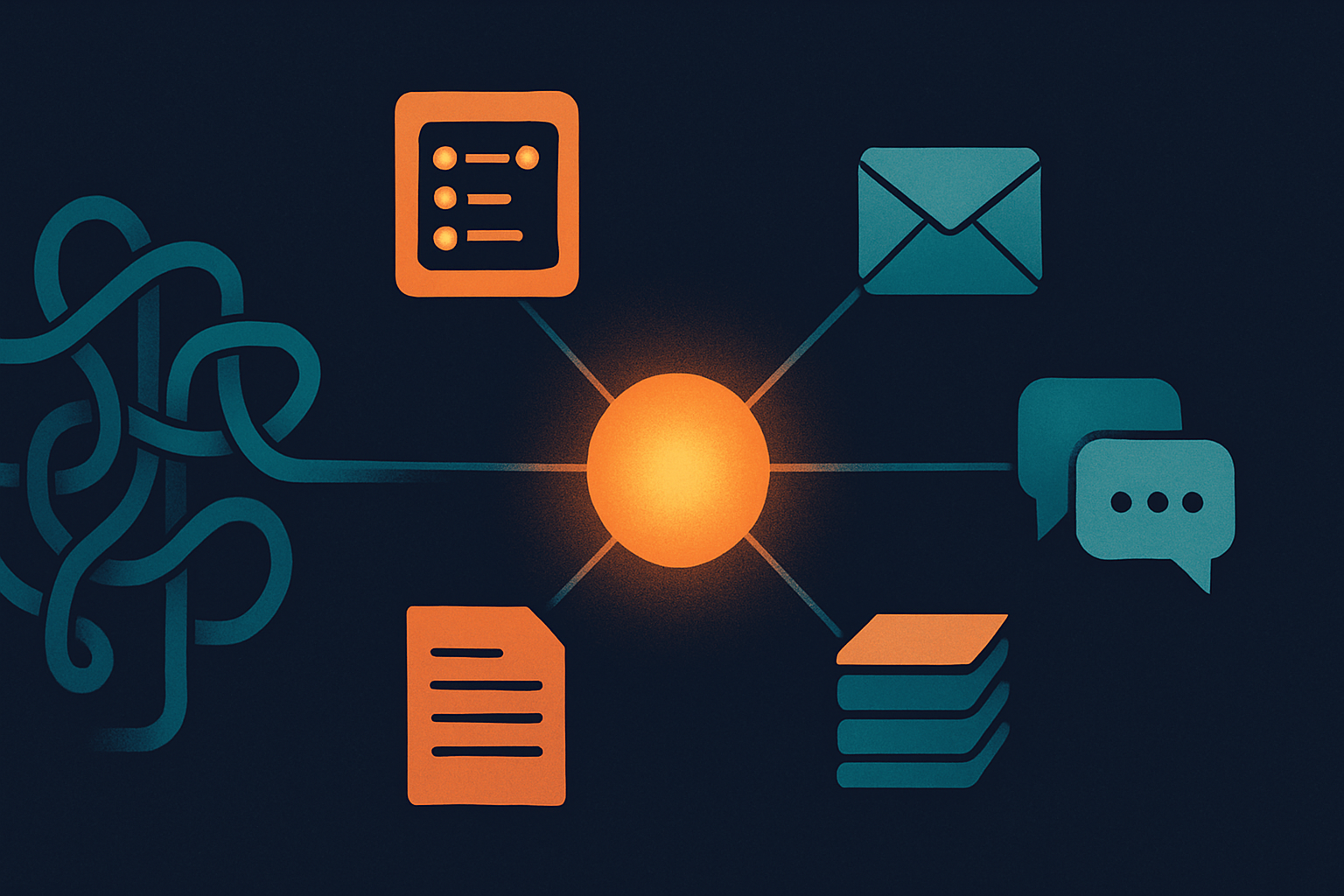
Google Gemini for Workspace federates Google-native content through Gmail, Drive, and Calendar; Gyri federates operational GTM systems into one queryable layer. Both connect multiple sources, but the architectural outcome differs: Gemini returns grounded answers from email, documents, spreadsheets, and meeting transcripts the signed-in user can access; Gyri joins CRM records, email threads, Slack messages, and documents as linked entities across vendor boundaries.
Buyers often conflate three Gemini surfaces:
- Gemini in Gmail, Docs, Sheets, Slides — drafting, summarization, and analysis inside the authoring surface.
- Gemini in Meet and Chat — meeting catch-up and team conversation summaries.
- Gemini app and Vertex AI — custom agents and extensions on Google Cloud; powerful for IT-led projects, not a turnkey cross-stack GTM brain.
Google workspace AI limitations appear when revenue truth lives outside Google's garden. For pre-call research, a rep preparing for a renewal needs deal stage in CRM, the champion's last emails, open support tickets, and Slack threads where pricing was discussed. Gemini delivers excellent thread summarization in Gmail; the full cross-system picture requires manual tab-switching into Salesforce, Slack, and the support portal.
Gyri's federated search targets revenue operators who need joins, not just hits. Gemini wins when the mandate is productivity inside Google apps. Gyri wins when GTM teams need operational joins across CRM, comms, and support without a warehouse project first.
Knowledge graph, citations, and memory
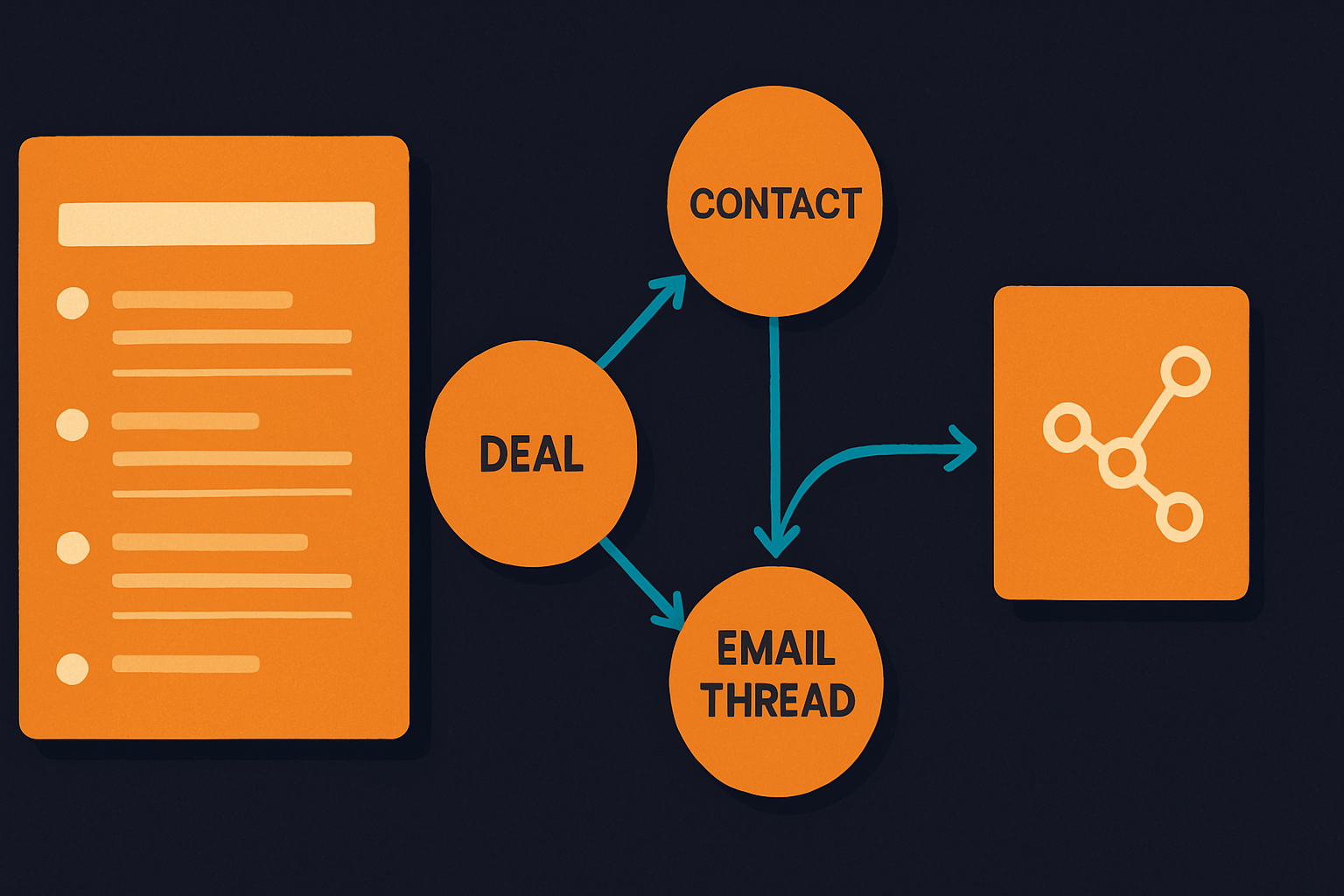
Gemini retrieves grounded content from indexed Workspace entities; Gyri traverses a typed knowledge graph with multihop GraphQL across CRM, email, Slack, and support. GTM reality rarely respects vendor boundaries. A typical revenue org might run Salesforce or HubSpot for pipeline, Gmail for customer email, Slack for deal rooms, and Zendesk for support history. Gemini's semantic index is built around Google-native content — emails, Docs, Sheets, Drive files, Meet transcripts. Third-party CRM and support connectors exist through Vertex extensions but coverage is uneven and configuration is IT-heavy.
Gyri models connected sources as typed graph nodes — people, deals, emails, Slack threads, support tickets, insights — linked through explicit bridges. Multihop GraphQL traverses deal → contact → email → ticket in one request. See Multihop GraphQL for business intelligence.
Concrete multihop questions revenue teams ask:
- "List every Slack mention of Competitor X tied to opportunities in negotiation stage."
- "Which accounts have declining email engagement AND rising support ticket volume in the last 30 days?"
- "Summarize the decision chain for the Acme renewal — who said what, when, across email and Slack?"
On cited answers and trust, Gemini grounding varies by surface — Gmail side-panel responses often cite the thread or Drive file used. Gyri treats AI answers with citations as a default, attaching claim-level citations so operators can audit why the model said "this account is at risk" by tracing each sentence to specific CRM fields, email messages, or Slack threads.
On insight persistence, Gemini interactions are largely session-centric — Drive and Docs history survive employee turnover at the file level, but structured competitive findings and account narratives do not compound as typed insights. Gyri stores typed insights in the workspace graph that accumulate across agent runs and human sessions. See Institutional memory when employees leave.
MCP agents, write-back, and GTM scenarios
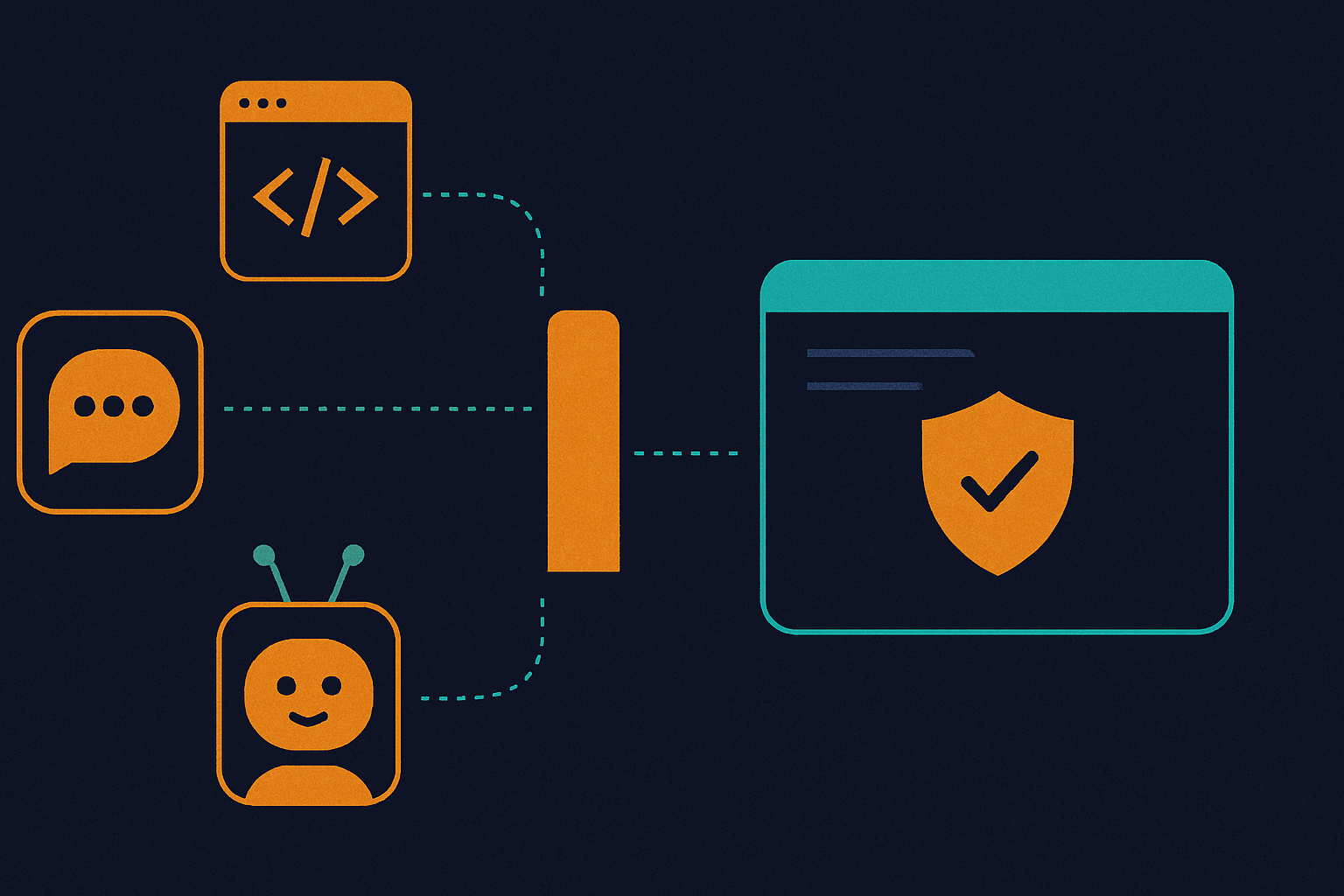
Gyri exposes company context through MCP for Claude, Cursor, and custom agents; Gemini delivers agents through Workspace UI, the Gemini app, and Vertex AI on Google Cloud. Most Gemini interactions end at generated text — a drafted email, a Doc summary, a Sheets formula suggestion. Write-back in the GTM sense — creating competitive insights linked to deals, updating CRM fields, publishing cited briefs — requires custom Apps Script, AppSheet, or Vertex agent projects.
Gyri agents write back into GTM systems with admin-defined guardrails: creating typed insights, updating custom records, and triggering workspace workflows. See MCP for business agents and Agents that write back.
| Scenario | Google Gemini for Workspace | Gyri |
|---|---|---|
| Pre-call briefs | Gmail thread summary and Meet notes | One cited brief with deal stage, champion engagement, tickets |
| Competitive intel | Search Drive folders and Gmail threads separately | Federate Slack and email; persist insights linked to accounts |
| Churn / CS signals | Needs non-Google CS tools wired separately | Join support themes, email tone, and CRM health in one synthesis |
| Write-back | Drafts in Google apps and Apps Script | Analyze loss → persist competitive insight → update battlecard |
Gemini wins when a single assistant inside Google UX is the requirement. Gyri wins when operators want agents in the tools they already use — all sharing one company graph with consistent permissions and write-back guardrails.
Implementation & TCO
Google Gemini for Workspace inherits enterprise procurement gravity through Workspace licensing; Gyri deploys as a workspace-scoped knowledge layer alongside Google — including Gmail and Drive connectors.
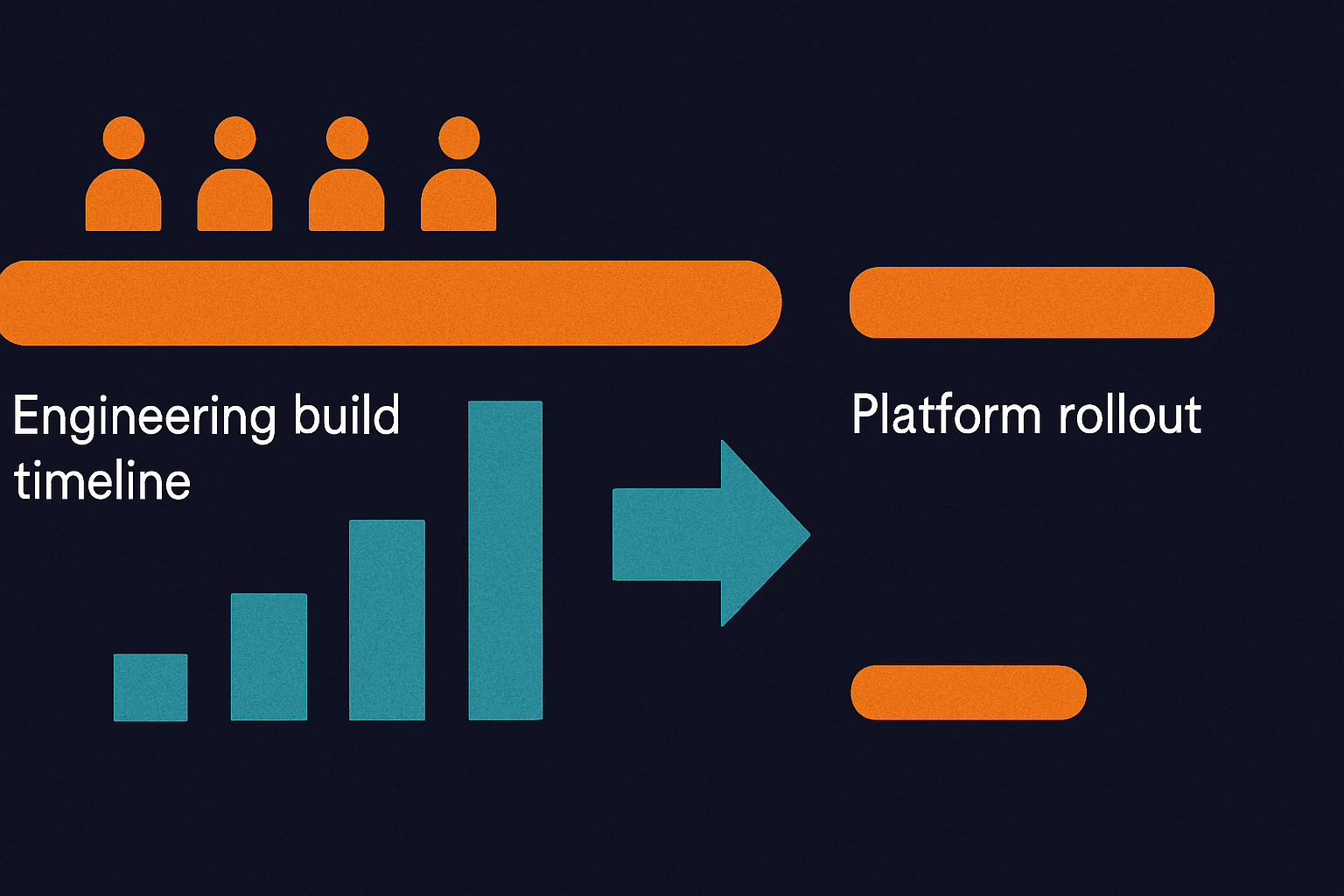
Google Gemini for Workspace rolls out along a familiar path: enable Gemini add-ons, configure admin policies, train employees on side-panel workflows. Time-to-value for Google-native productivity is days. The hidden cost for GTM teams is everything outside Google — connecting Salesforce, Slack, and Zendesk typically means Google Cloud professional services or internal engineering on Vertex extensions.
Gyri publishes clearer self-serve and team paths at gyri.io/get-started. Rollouts often start with a GTM wedge: connect CRM, email, and Slack; ship pre-call briefs or competitive monitoring; expand once cited answers prove trustworthy in deal reviews. Gyri maintains the federation layer for connector long-tail — you do not build per-workflow Vertex agents for every cross-system question. See Connect CRM, Slack, and docs in one AI workspace.
When to use both: Keep Gemini for every employee's Gmail drafting, Doc summarization, and Meet notes. Add Gyri for federated CRM + comms intelligence, cited customer research, MCP agents in Claude and Cursor, and insight persistence Gemini chat does not provide. Many enterprises run Google where the files live and Gyri where the revenue truth lives.
Verdict
Choose Gyri if:
- Your GTM stack spans CRM (Salesforce, HubSpot, Insightly), Slack, Gmail, and non-Google systems — and success requires joining them, not searching each silo separately
- You need multihop questions across deals, contacts, email, and support — not only summarization inside Google apps
- Citation-auditable synthesis is required before answers go to customers, executives, or legal review
- You want MCP-native agents in Claude, Cursor, and custom tooling — a shared graph, not AI locked to Google's side panels
- Write-back, custom records, and insight persistence matter: competitive intel and account narratives should compound over quarters
Choose Google Gemini for Workspace if:
- Your organization is standardized on Google Workspace — Gmail, Drive, Docs, Sheets, Meet, Chat — and most authoritative content lives there
- Primary use cases are individual and team productivity inside Google apps: draft, summarize, analyze Sheets, generate Slides, meeting catch-up
- IT and Google admins want a single-vendor rollout with familiar admin consoles, Vault, DLP, and Google's enterprise security posture
- Embedded UX matters more than cross-vendor federation — users should never leave Gmail or Docs to get AI help
- You will address Salesforce, Slack, and support tooling through separate Google Cloud or partner integration projects when needed
Choose both if:
- Gemini covers document and email productivity for the whole company
- Gyri covers federated GTM intelligence, cited customer research, and MCP agents for technical and ops teams
- You want Google where the files live and Gyri where the revenue truth lives
The category shift is from "AI inside my apps" to "AI that understands my company." Gemini wins the first framing inside Google. Gyri wins the second for teams whose company context does not fit in a single vendor's graph.
To see federation, citations, and MCP agents on your actual CRM and comms stack, start your free trial. For category context, read What is an agentic knowledge base? and RAG vs knowledge graph for companies.
FAQ
What is the difference between Gyri and Google Gemini for Workspace?
Google Gemini for Workspace and Gyri both connect company data to AI, but they optimize for different jobs. Gyri is an agentic knowledge base for GTM teams — federated search, multihop graph queries, cited synthesis, MCP-native agents, and write-back workflows. Google Gemini for Workspace excels at productivity inside Gmail, Docs, Sheets, and Meet; Gyri is built for revenue and operations teams that need cited, persistent operational intelligence across CRM, Slack, and support.
When should I choose Gyri over Google Gemini for Workspace?
Choose Gyri when your buyers are RevOps, Sales, CS, or Enablement; when you need multihop questions across CRM, email, Slack, and support; when citation-auditable synthesis is required; and when MCP agents and write-back workflows must compound institutional memory over quarters.
When should I choose Google Gemini for Workspace over Gyri?
Choose Google Gemini for Workspace when its native strengths — Workspace integration, Google IAM governance, and in-app productivity — match your primary mandate better than cross-stack GTM intelligence. Many enterprises run Gemini for company-wide productivity alongside Gyri for revenue teams.
Does Gyri integrate with MCP agents like Claude and Cursor?
Yes. Gyri exposes workspace search, graph queries, cited synthesis, and write-back tools via MCP (Model Context Protocol). Agents in Claude Desktop, Cursor, and custom tooling can query federated context without exporting data to a chat window.
Can I try Gyri before committing?
Yes. Gyri offers a free trial at app.gyri.io where teams connect CRM, email, Slack, and docs and see federated search with cited answers in minutes.