At a glance
If you are evaluating a perplexity enterprise alternative for revenue teams, you are likely impressed by Perplexity's speed and citation UX. Perplexity Enterprise is a top enterprise answer engine — web plus internal sources, readable answers with numbered footnotes. Gyri is an agentic knowledge base for a different job: operational intelligence that joins CRM, email, Slack, and support into one cited graph your GTM teams can act on.
Perplexity built its reputation on perplexity for business at scale — fast Q&A with SOC 2 governance, Carbon connector breadth, and Spaces for collaborative research. Gyri targets revenue operators who need answers that compound after the session ends: multihop CRM joins, claim-level citations to live records, and MCP agents that persist competitive findings across quarters.
Gyri delivers four capabilities Perplexity Enterprise was not designed to center:
- Federated GTM stack — one query across CRM, email, Slack, and docs, not siloed app-by-app search
- Cited AI answers — synthesis with source citations your reps can trust in customer-facing work
- Context that compounds — a knowledge graph and persisted insights, not chat that resets every session
- MCP agents that write back — Claude, Cursor, and custom agents that update CRM, create insights, and run workflows
Perplexity wins on research velocity, footnote polish, and company-wide answer-engine adoption. Gyri wins when RevOps, Sales, CS, and Enablement need persistent operational intelligence tied to live CRM records — not iterative prompts stitched into a narrative. For adjacent evaluations, see Gyri vs ChatGPT Enterprise and Gyri vs Glean.
Quick comparison
Legend: ✅ Strong · ⚠️ Partial · ❌ Not native
| Capability | Gyri | Perplexity Enterprise |
|---|---|---|
| Federation & search | ||
| Federated search (CRM + comms + docs) | near-real-time sync across Gmail, Slack, Drive, CR… | Connected sources |
| Keyword + semantic hybrid retrieval | exact-match keyword search plus semantic graph ret… | Answer engine |
| Real-time / webhook ingestion | webhooks and scheduled crawlers keep records current | Connector refresh |
| Custom API / HTTP connectors | workspace HTTP endpoints and bridge mutations | Enterprise APIs |
| Knowledge graph & multihop | ||
| Typed entity knowledge graph | people, deals, emails, threads linked as graph nodes | Answer retrieval |
| Multihop GraphQL queries | traverse deal → contact → email → ticket in one qu… | No ops graph |
| Cross-source correlation | joins timing, people, and language across systems | Multi-source answers |
| Cited answers & trust | ||
| Cited AI answer synthesis | claim-level citations to source records | Inline citations |
| Audit trail / citation chains | full citation chain back to original sources | Enterprise controls |
| Insight persistence & memory | ||
| Compounding insights | structured insights accumulate across sessions | Spaces, not graph |
| Institutional memory | decisions and context survive employee turnover | Spaces |
| Version history on knowledge | insight and record versioning | Answer sessions |
| MCP agents & delivery | ||
| MCP-native agent endpoint | one MCP surface for Claude, Cursor, custom agents | Not MCP-native |
| Workspace-scoped auth & audit | per-workspace permissions and tool visibility | Enterprise SSO |
| Write-back workflows | ||
| CRM / record write-back | agents update custom records and CRM fields | Read-focused |
| Agent-driven workflow automation | stored agents and workspace workflows on rails | Computer agent beta |
| GTM workflows | ||
| Pre-call briefs | cited briefs from CRM + email + support | Fast research |
| Competitive intelligence | competitor mentions across Slack and email, persis… | Web + files |
| Churn / CS health signals | support themes joined to account health in CRM | No CRM join |
| Sales enablement / battlecards | live cited synthesis vs static wiki cards | Research speed |
| Implementation & TCO | ||
| Time to value (GTM teams) | Days–weeks · pre-built connectors and graph schema | Fast answers |
| Connector long-tail maintenance | Managed · Gyri maintains federation layer | Connector catalog |
| Pricing transparency | Published · see gyri.io/get-started | Enterprise tiers |
Where Perplexity Enterprise wins
Perplexity Enterprise is one of the strongest enterprise answer engines on the market. For organizations that need fast, footnoted synthesis across web and internal sources, the native advantage is real:
- Answer engine UX — numbered footnotes, source cards, and readable synthesis in seconds; among the best citation polish for research validation.
- Web plus internal knowledge — blend market data, competitor filings, and connected org files in one query without switching tools.
- Perplexity Spaces — collaborative research threads for proposals, strategy memos, and deal-desk prep that persist as organized workspaces.
- Carbon connector breadth — Salesforce, HubSpot, Slack, Drive, Confluence, Notion, and more with SOC 2 governance and enterprise SSO.
- Perplexity Computer — in-product app actions (Notion, Linear, email) for individual productivity workflows without custom agent builds.
- Public seat pricing — Enterprise Pro/Max tiers make research-team seat math straightforward compared with opaque enterprise sales cycles.
If your primary mandate is fast cited research for analysts, PMM, strategy, and knowledge workers — not multihop CRM joins — Perplexity Enterprise earns its reputation. Gyri is not a replacement for that answer-engine UX; it is a perplexity enterprise alternative for teams whose intelligence problem has moved from "find and synthesize" to "operate on live account context with proof."
Federation & search
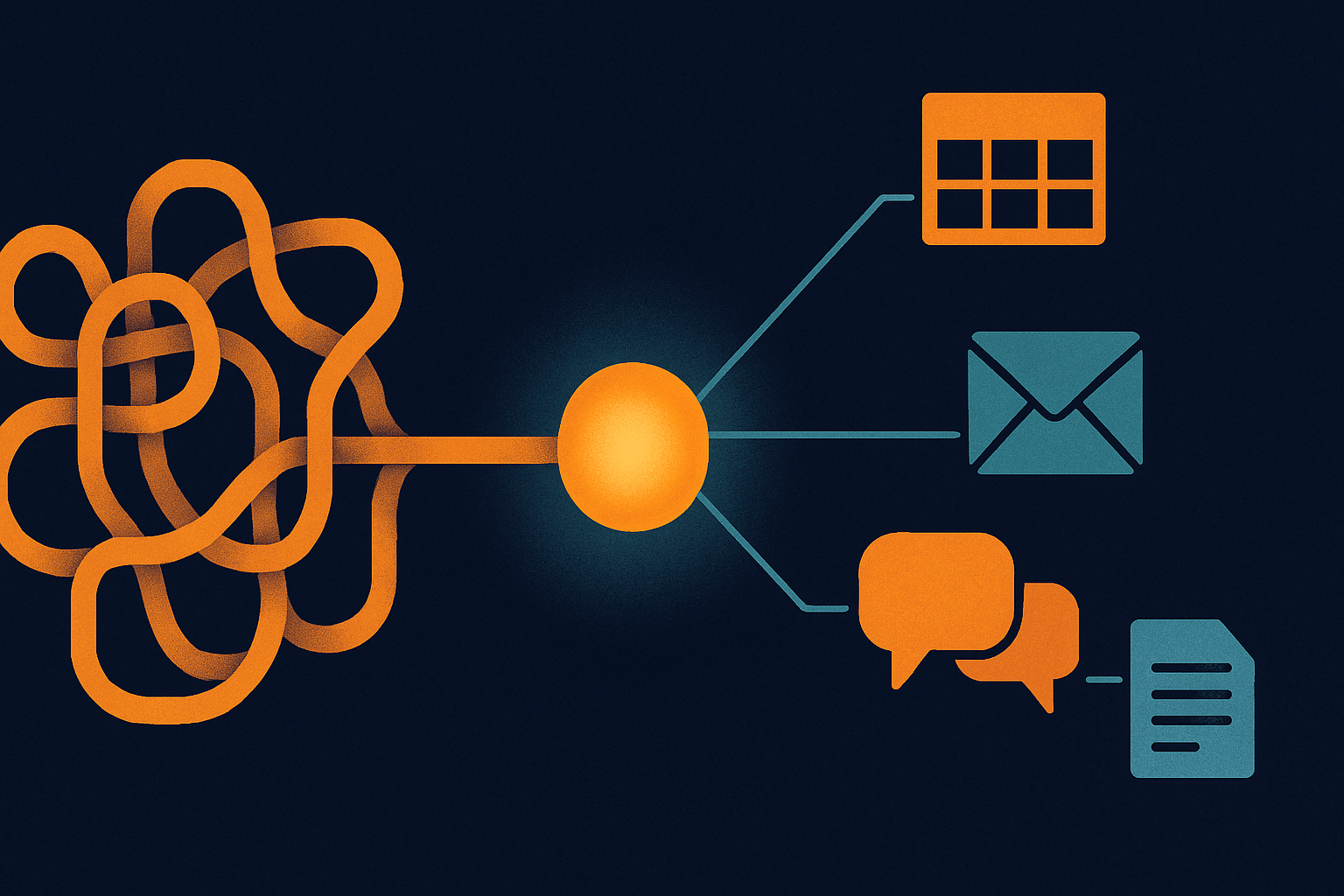
Perplexity federates indexed content into cited answers; Gyri federates operational GTM systems into a typed graph you can query and write back to. Both connect multiple sources, but the architectural outcome differs.
Perplexity built its reputation on speed — Internal Knowledge Search over files, org repos, and connected apps (Salesforce, HubSpot, Slack, Drive, Confluence, Notion via Carbon). Excellent for blending market data with internal decks and producing footnoted synthesis in seconds.
Gyri treats CRM, Gmail, Slack, and tickets as typed graph nodes — operational joins, not only research synthesis. For pre-call research, Perplexity produces cited summaries from connected sources; Gyri runs a single federated query tied to record IDs without re-prompting. See Federated search for business AI.
Perplexity's answer engine UX wins ad hoc research across web and internal files. Gyri wins operational joins when the question is account-shaped — deal stage, champion engagement, open tickets, Slack pricing threads. Many teams use Perplexity for market research and Gyri for account operations.
Knowledge graph & multihop
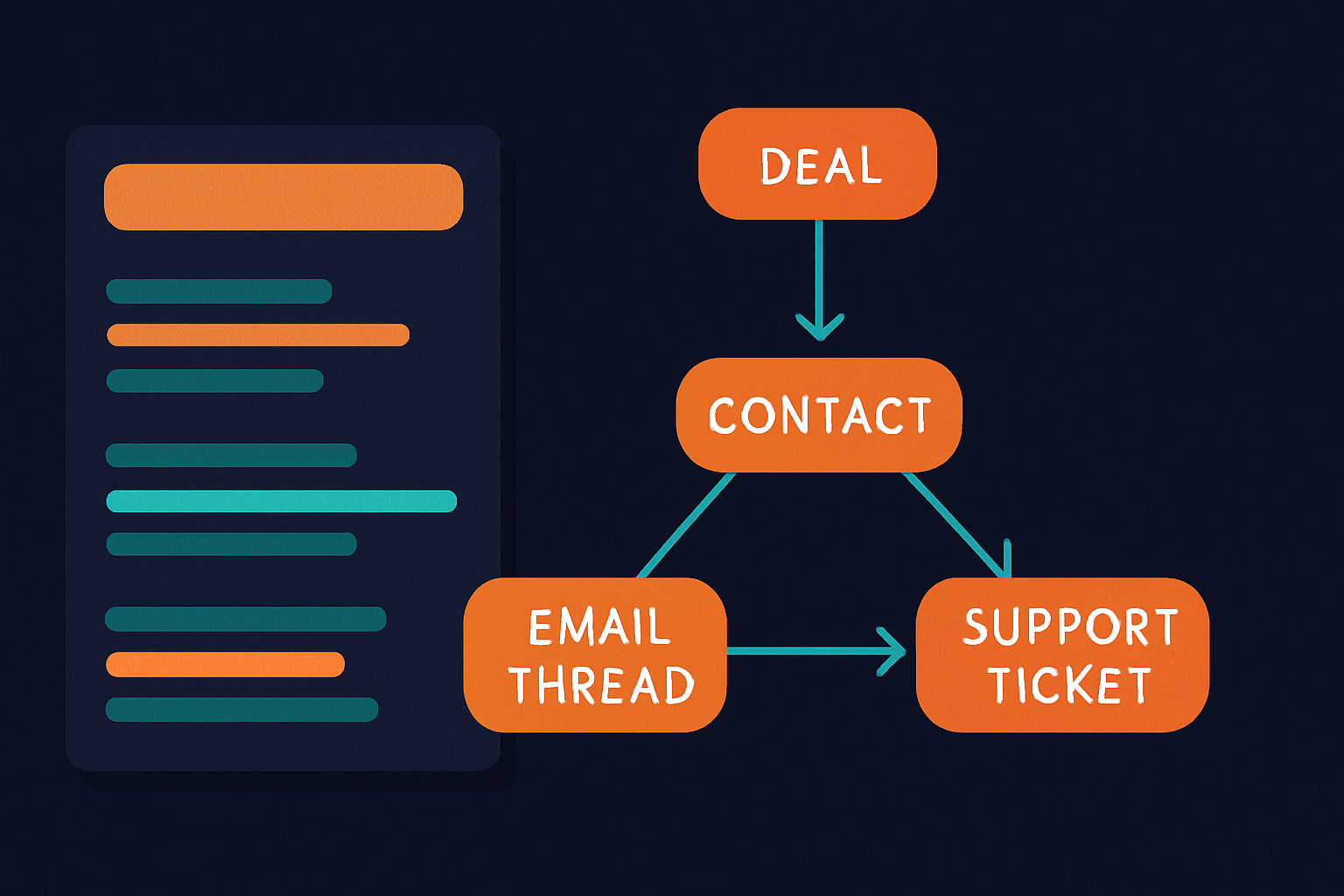
Perplexity retrieves and synthesizes from indexed content; Gyri traverses a typed knowledge graph with multihop GraphQL. This is the deepest architectural divide between an enterprise answer engine and an agentic knowledge base.
Perplexity is an enterprise answer engine — RAG over indexed content and web — not a typed knowledge graph with multihop operators. Related records may appear together if they share keywords or embedding proximity, but there is no native graph of deals, contacts, emails, and tickets.
Concrete multihop questions revenue teams ask:
- "Which open opportunities over $50K have champions who went quiet in email after a P1 support escalation?"
- "What commitments did we make across email and Slack before the renewal call?"
- "List every Slack mention of Competitor X tied to opportunities in negotiation stage."
Perplexity approximates through Spaces and threaded prompts; Gyri exposes multihop GraphQL in one request. See Multihop GraphQL for business intelligence.
Cited answers & trust
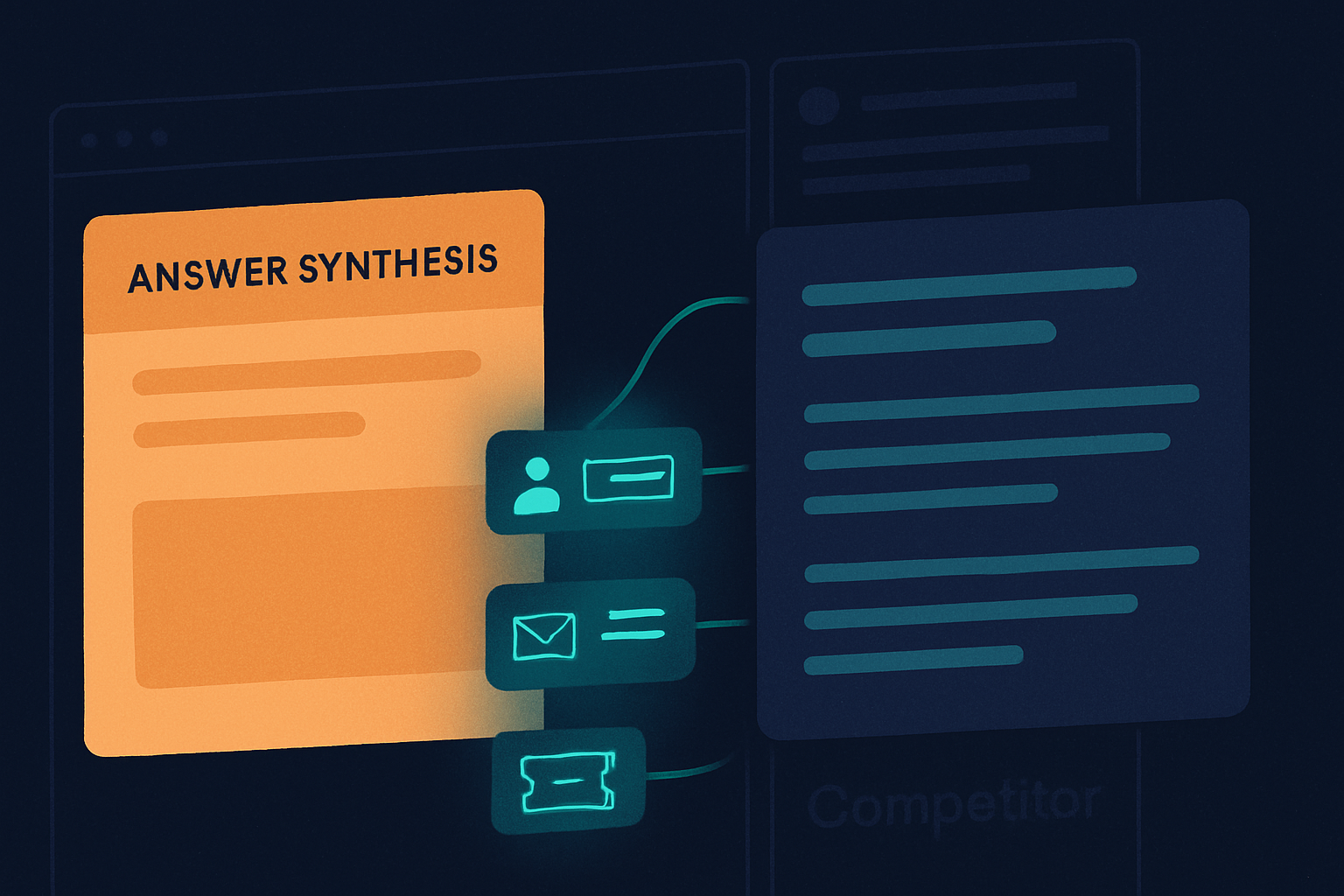
Perplexity's citation UX is best-in-class for research validation; Gyri attaches claim-level citations to operational records revenue teams must audit. Both platforms cite sources — the trust model differs by audience.
Perplexity's citation UX — numbered footnotes, source cards, inline references — is among the best for validating research synthesis. Analysts and PMM teams can scan footnotes and confirm a claim against the retrieved document in seconds.
Gyri wins claim-level lineage to operational records: opportunity IDs, email refs, ticket bodies — AI answers with citations. Perplexity cites retrieved documents; Gyri cites the business entity the claim attaches to. Customer-facing work, executive briefings, and renewal calls need evidence chains beyond document retrieval.
Insight persistence & memory
Perplexity Spaces preserve research threads; Gyri stores typed insights that compound across sessions and survive employee turnover. Both retain knowledge — one organizes research, the other builds operational memory.
Perplexity Spaces organize research and preserve threads — valuable for proposals, strategy memos, and deal-desk collaboration. Teams return to a Space and continue where they left off without re-prompting from scratch.
Spaces do not replace compounding operational memory. Gyri stores typed insights — competitive dossiers, account narratives, churn risk summaries — linked to source records on the workspace graph. When an AE departs, Gyri retains what happened on their accounts — not only the research threads they bookmarked. See Institutional memory when employees leave.
MCP agents & delivery
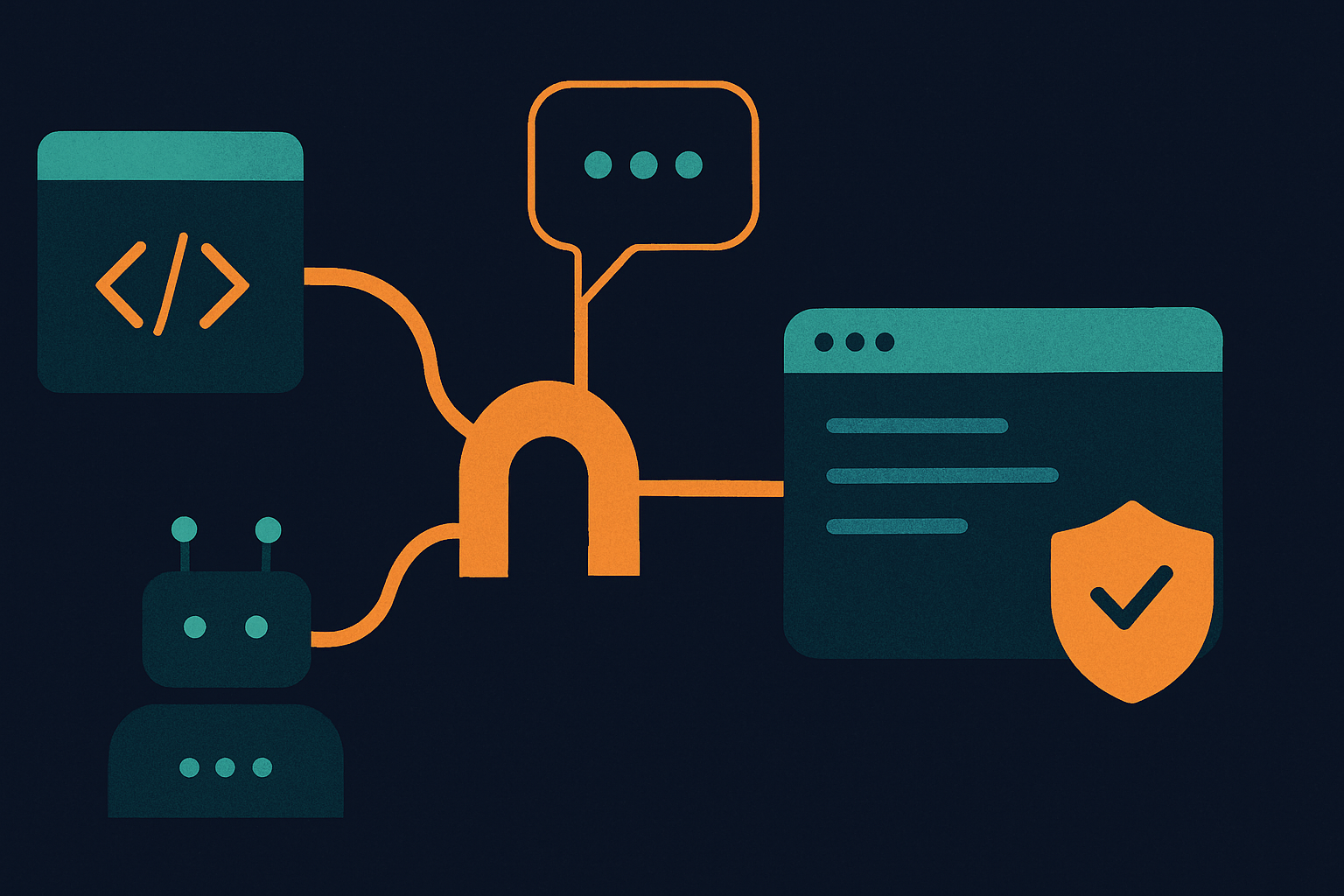
Perplexity delivers agents inside its answer-engine UI; Gyri is the MCP endpoint into your company graph for Claude, Cursor, and custom agents. Both support agent workflows — the integration surface differs.
Perplexity supports BYOC MCP connectors and Perplexity Computer workflows in its UI — strong when teams want one research front door with growing automation. Agents outside Perplexity cannot query your company context without copy-paste exports.
Gyri is the MCP endpoint into your company graph for Claude, Cursor, and custom agents — search, multihop GraphQL, insight creation, write-back. See MCP for business agents. Both can coexist: Perplexity for research, Gyri for cross-stack GTM agents.
Write-back workflows
Perplexity app connectors automate individual productivity; Gyri agents write cited insights and CRM-adjacent records across GTM closed loops. Both move beyond read-only Q&A — the write-back scope differs.
Perplexity app connectors draft email, create Notion docs, assign Linear tickets — strong for individual productivity and knowledge-worker automation inside connected apps.
Gyri write-back targets GTM closed loops: persistent competitive insights, churn briefings, battlecard refresh from Slack mentions — in the company graph, not thread exports. Read Agents that write back.
| Scenario | Perplexity Enterprise | Gyri |
|---|---|---|
| Research synthesis with footnotes | Best-in-class answer engine | Cited, ops-focused |
| Create Notion doc from research | Perplexity Computer | Via agents |
| Persist competitive finding on deal | Space thread export | Typed insight linked to opportunity |
| Pre-call brief from CRM + email + Slack | Multi-source answer | Federated cited brief |
| Update CRM field from intel | Read-focused | Agents write back with citations |
GTM workflows
Perplexity excels at research-speed GTM adjacency; Gyri excels at operational GTM workflows that join CRM, comms, and support with persistence. Concrete scenarios clarify the split.
Pre-call briefs. A rep opens Perplexity, selects relevant Spaces or connectors, asks for a brief on Acme Corp, and gets a fast cited answer — often good enough when connectors cover Salesforce and Gmail. Gyri federates opportunity → contacts → recent email → Slack → support in one query and can persist the brief as an insight on the deal for the next touch.
Competitive intelligence. Perplexity excels at speed: scan web plus internal comms, produce a cited summary for a deal desk in minutes. Gyri excels at persistence: competitor mentions across Slack and email become typed insights enablement links to battlecards — compounding quarter over quarter. See Competitive intelligence across Slack and email.
Churn and CS health. Perplexity can summarize ticket exports and CRM notes in one answer. Gyri joins escalation themes to account health scores with multihop queries and cited risk insights the whole pod shares. See Churn analysis from support and CRM.
Enablement. Perplexity is excellent for drafting battlecard content with citations. Gyri is built for live cited synthesis tied to the deal graph — less static wiki maintenance, more operational freshness. See Sales enablement with cited AI.
Perplexity fits research-heavy GTM adjacency (strategy, PMM, deal desk research). Gyri fits operators who live in CRM and comms daily — AEs, CSMs, RevOps, enablement owners measuring pipeline and retention outcomes.
Implementation & TCO
Perplexity Enterprise optimizes for fast research-team rollout; Gyri optimizes for a GTM wedge that proves cited federation value in the first week. Both ship quickly — success metrics differ.
Perplexity Enterprise rollouts are fast for research teams: SSO, Carbon connectors, Spaces, measure by queries answered. Public Enterprise Pro/Max pricing helps seat math for analyst and knowledge-worker cohorts.
Gyri rollouts skew GTM: connect CRM, email, Slack; ship pre-call briefs or competitive monitoring; expand once cited answers prove trustworthy in deal reviews. Gyri publishes clearer self-serve and team paths at gyri.io/get-started.
Perplexity wins time-to-first-cited-answer for research; Gyri pays back when revenue operators stop re-asking the same account questions weekly. Many organizations run both patterns: Perplexity for market synthesis, Gyri for account operations that must compound.
Verdict
Choose Gyri if…
- Your buyers are RevOps, Sales, CS, or Enablement — and success is measured in pipeline, retention, and operational freshness, not only research throughput.
- You need multihop questions across CRM, email, Slack, and support — not iterative answer-engine prompts stitched into a narrative.
- Claim-level citations to operational records matter before answers go to customers, executives, or renewal calls.
- You want a native MCP endpoint into your company graph for Claude, Cursor, and custom agents — not only MCP connectors feeding Perplexity's UI.
- Write-back and insight persistence are part of the ROI: competitive intel, account narratives, and institutional memory should compound over quarters.
- Your wedge is GTM workflows — pre-call briefs, churn signals, federated enablement — not company-wide research Q&A.
Start your free trial to see federated search, cited synthesis, and write-back agents on your stack.
Choose Perplexity Enterprise if…
- Your primary job is fast cited research — web plus internal sources — with best-in-class answer engine UX and footnote polish.
- Teams live in Perplexity Spaces for collaborative research, proposals, and strategy memos, and want one interface for internal + external knowledge.
- You need broad app connectors quickly without standing up a knowledge graph — and your questions are research-shaped, not multihop CRM joins.
- Perplexity Computer and in-product app actions (Notion, Linear, email) cover your automation scope without CRM-native write-back.
- Time-to-value for research and knowledge workers matters more than compounding typed insights for revenue operators.
- Public per-seat pricing and a familiar consumer-grade UX accelerate adoption across non-GTM functions.
Many organizations run both patterns: Perplexity Enterprise for fast research and market synthesis, and an agentic knowledge base for GTM intelligence that must be joined, persisted, and written back. If your immediate pain is revenue operators flying blind across CRM and comms — not analysts who need faster footnotes — start where the closed loop lives.
For category context, read What is an agentic knowledge base? and Best agentic knowledge base for GTM teams (2026).
FAQ
What is the difference between Gyri and Perplexity Enterprise?
Perplexity Enterprise and Gyri both connect company data to AI, but they optimize for different jobs. Perplexity Enterprise is an enterprise answer engine — fast cited synthesis from web plus connected internal sources with Spaces for collaborative research. Gyri is an agentic knowledge base for GTM teams — federated search, multihop graph queries, claim-level citations to operational records, MCP-native agents, and write-back workflows that compound institutional memory.
When should I choose Gyri over Perplexity Enterprise?
Choose Gyri when your buyers are RevOps, Sales, CS, or Enablement; when you need multihop questions across CRM, email, Slack, and support in one query; when citation-auditable synthesis must link to opportunity IDs and ticket bodies before answers go to customers; and when MCP agents and write-back workflows must persist competitive intel and account narratives across quarters.
When should I choose Perplexity Enterprise over Gyri?
Choose Perplexity Enterprise when your primary job is fast cited research across web and internal files; when teams live in Perplexity Spaces for proposals and strategy memos; when Perplexity Computer and in-product app actions cover your automation scope; and when company-wide answer-engine adoption matters more than CRM-native write-back and compounding GTM insights.
Does Gyri integrate with MCP agents like Claude and Cursor?
Yes. Gyri exposes workspace search, graph queries, cited synthesis, and write-back tools via MCP (Model Context Protocol). Agents in Claude Desktop, Cursor, and custom tooling can query federated context without exporting data to a chat window.
Can I try Gyri before committing?
Yes. Gyri offers a free trial at app.gyri.io where teams connect CRM, email, Slack, and docs and see federated search with cited answers in minutes.