At a glance
If you are evaluating a Slack AI alternative because revenue teams need more than thread summaries, you are not alone. Slack AI is strong Slack enterprise AI: channel recaps, thread summaries, huddle notes, and permission-safe workspace search inside the tool your company already lives in — minimal change management and fast adoption.
Revenue teams live in a messier world. The deal narrative sits in Salesforce or HubSpot. The champion's last objection landed in Gmail. Competitive whispers accumulate in Slack channels. Support friction lives in Zendesk or Intercom. When you evaluate Slack AI, the question is not whether it can recap #deal-acme — it is whether comms-native AI can answer multihop GTM questions that span CRM, email, and tickets.
Gyri is an agentic knowledge base built for GTM operators who need more than in-channel search:
- Federated GTM stack — one query across CRM, email, Slack, and docs, not siloed app-by-app search
- Cited AI answers — synthesis with source citations your reps can trust in customer-facing work
- Context that compounds — a knowledge graph and persisted insights, not chat that resets every session
- MCP agents that write back — Claude, Cursor, and custom agents that update CRM, create insights, and run workflows
Slack AI deserves credit where it earns it: best-in-class comms productivity, Grid ACL inheritance, zero new vendor for Slack-standard teams, and Workflow Builder automations that keep work inside Slack. Gyri targets RevOps, Sales, CS, and Enablement leaders who need cross-stack GTM intelligence that joins CRM stage, email threads, Slack decisions, and support history in one auditable answer.
For adjacent evaluations, see Gyri vs Glean and Gyri vs Microsoft Copilot.
Quick comparison
Legend: ✅ Strong · ⚠️ Partial · ❌ Not native
| Capability | Gyri | Slack AI |
|---|---|---|
| Federation & search | ||
| Federated search (CRM + comms + docs) | near-real-time sync across Gmail, Slack, Drive, CR… | Slack-strong; CRM weak |
| Keyword + semantic hybrid retrieval | exact-match keyword search plus semantic graph ret… | Channel search |
| Real-time / webhook ingestion | webhooks and scheduled crawlers keep records current | Slack-native |
| Custom API / HTTP connectors | workspace HTTP endpoints and bridge mutations | Slack apps |
| Knowledge graph & multihop | ||
| Typed entity knowledge graph | people, deals, emails, threads linked as graph nodes | Threads not graph |
| Multihop GraphQL queries | traverse deal → contact → email → ticket in one qu… | No CRM traversal |
| Cross-source correlation | joins timing, people, and language across systems | Within Slack |
| Cited answers & trust | ||
| Cited AI answer synthesis | claim-level citations to source records | Message permalinks |
| Audit trail / citation chains | full citation chain back to original sources | Slack retention |
| Insight persistence & memory | ||
| Compounding insights | structured insights accumulate across sessions | No insight objects |
| Institutional memory | decisions and context survive employee turnover | Slack history |
| Version history on knowledge | insight and record versioning | Message edits |
| MCP agents & delivery | ||
| MCP-native agent endpoint | one MCP surface for Claude, Cursor, custom agents | Not MCP-native |
| Workspace-scoped auth & audit | per-workspace permissions and tool visibility | Grid ACL |
| Write-back workflows | ||
| CRM / record write-back | agents update custom records and CRM fields | SF shortcuts |
| Agent-driven workflow automation | stored agents and workspace workflows on rails | Workflow Builder |
| GTM workflows | ||
| Pre-call briefs | cited briefs from CRM + email + support | Thread summaries |
| Competitive intelligence | competitor mentions across Slack and email, persis… | Slack search |
| Churn / CS health signals | support themes joined to account health in CRM | CS channels only |
| Sales enablement / battlecards | live cited synthesis vs static wiki cards | Pinned docs |
| Implementation & TCO | ||
| Time to value (GTM teams) | Days–weeks · pre-built connectors and graph schema | Comms-only teams |
| Connector long-tail maintenance | Managed · Gyri maintains federation layer | Not federation layer |
| Pricing transparency | Published · see gyri.io/get-started | Slack AI add-on |
Where Slack AI wins
Slack AI is arguably the best comms-native AI experience on the market. For organizations where Slack is the primary coordination layer, the native advantage is real:
- Channel recaps and thread summaries — catch up on
#product-launchor a 47-message thread in seconds without reading every reply. - Huddle notes and action items — meeting summaries land where the team already works, with permission-safe ACL inheritance on Enterprise Grid.
- Workspace search with AI — find decisions, files, and people inside Slack with relevance tuned to channels you can access.
- Zero new vendor — Slack AI ships as an add-on to existing Enterprise Grid contracts with admin controls IT already operates.
- Salesforce-in-Slack shortcuts — surface CRM records, update stages, and trigger app workflows without leaving the client many reps already have open all day.
If your primary mandate is comms productivity — faster scroll, better search, fewer "what did I miss?" moments — Slack AI earns its place. Gyri is not a replacement for that UX; it is a slack ai alternative for teams whose intelligence problem has moved beyond what was said in channels.
Federation & search
Slack AI searches and summarizes inside Slack; Gyri federates CRM, email, Slack, and docs into one queryable GTM layer. Both touch conversational data, but the architectural outcome differs: Slack AI returns channel-grounded answers bounded by Slack permissions; Gyri joins CRM records, email threads, Slack messages, and documents as linked entities across vendor boundaries.
Slack AI excels when authoritative decisions are posted to channels with good hygiene. An AE asking what did we decide on pricing for Acme? gets a thread recap with message permalinks — fast and sufficient for internal coordination. RevOps multihop questions like deals over $100K with quiet champions after a P1 escalation require joins Slack AI was not built to perform.
Gyri treats Slack as a high-signal connector in a federated GTM stack. Pre-call research that needs CRM stage, champion emails, open tickets, and Slack pricing threads assembles in one cited response. See Federated Search for Business AI.

Knowledge graph & multihop
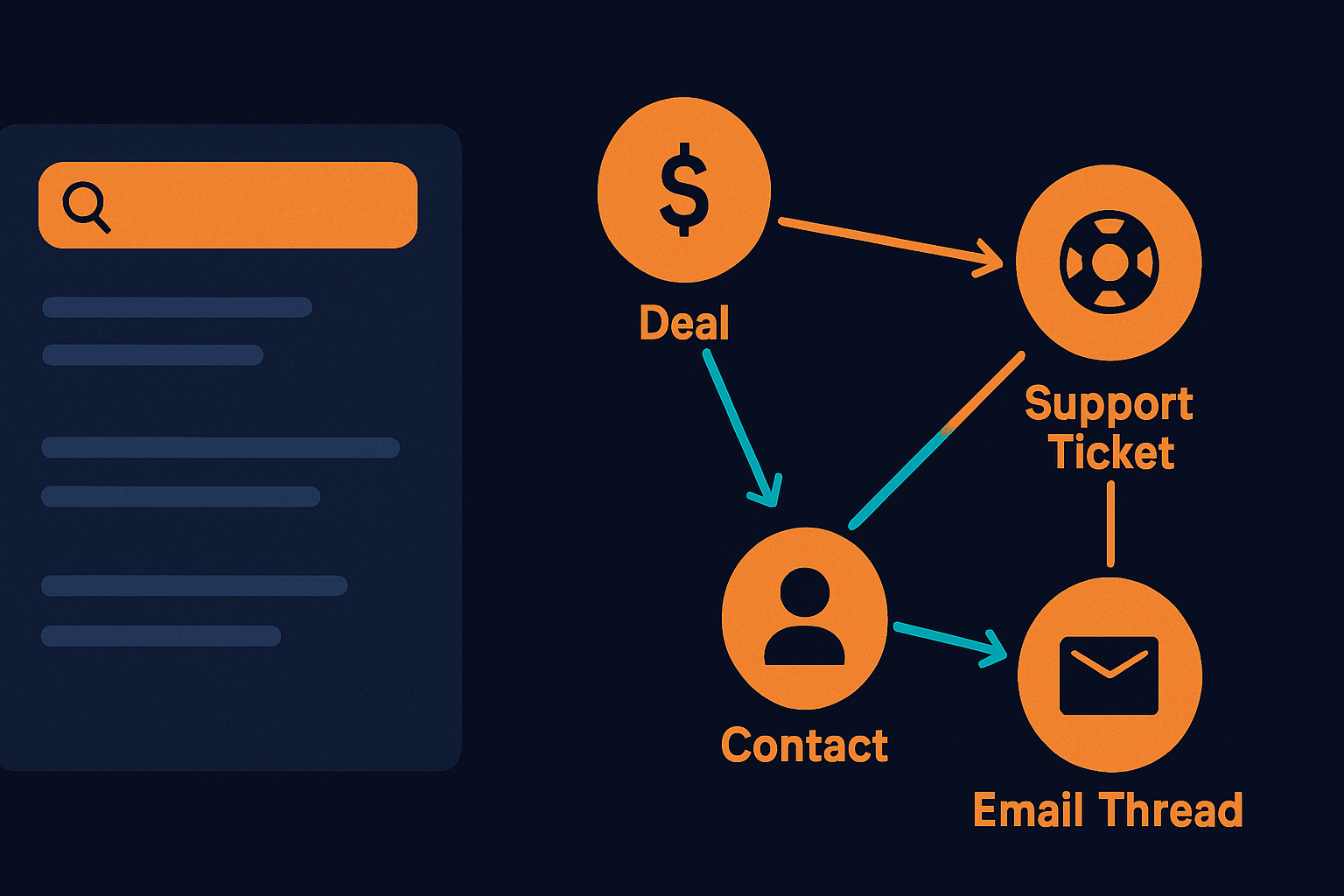
Slack AI retrieves messages and files; Gyri traverses a typed knowledge graph with multihop GraphQL across CRM, email, Slack, and support. Slack search makes individual messages findable — excellent for "find the thread where we discussed Competitor X." It does not model deals, contacts, emails, and tickets as linked graph nodes you can traverse in one query.
Concrete multihop questions revenue teams ask:
- "Which open deals over $100K have champions who went quiet in email after a support escalation?"
- "What commitments did we make across email and Slack before the renewal call?"
- "List every Slack mention of Competitor X tied to opportunities in negotiation stage."
Slack AI cannot answer these without manual correlation across Salesforce tabs, Gmail search, and channel archaeology. Gyri's multihop GraphQL traverses deal → contact → email → ticket in one request. See Multihop GraphQL for Business Intelligence.
Cited answers & trust
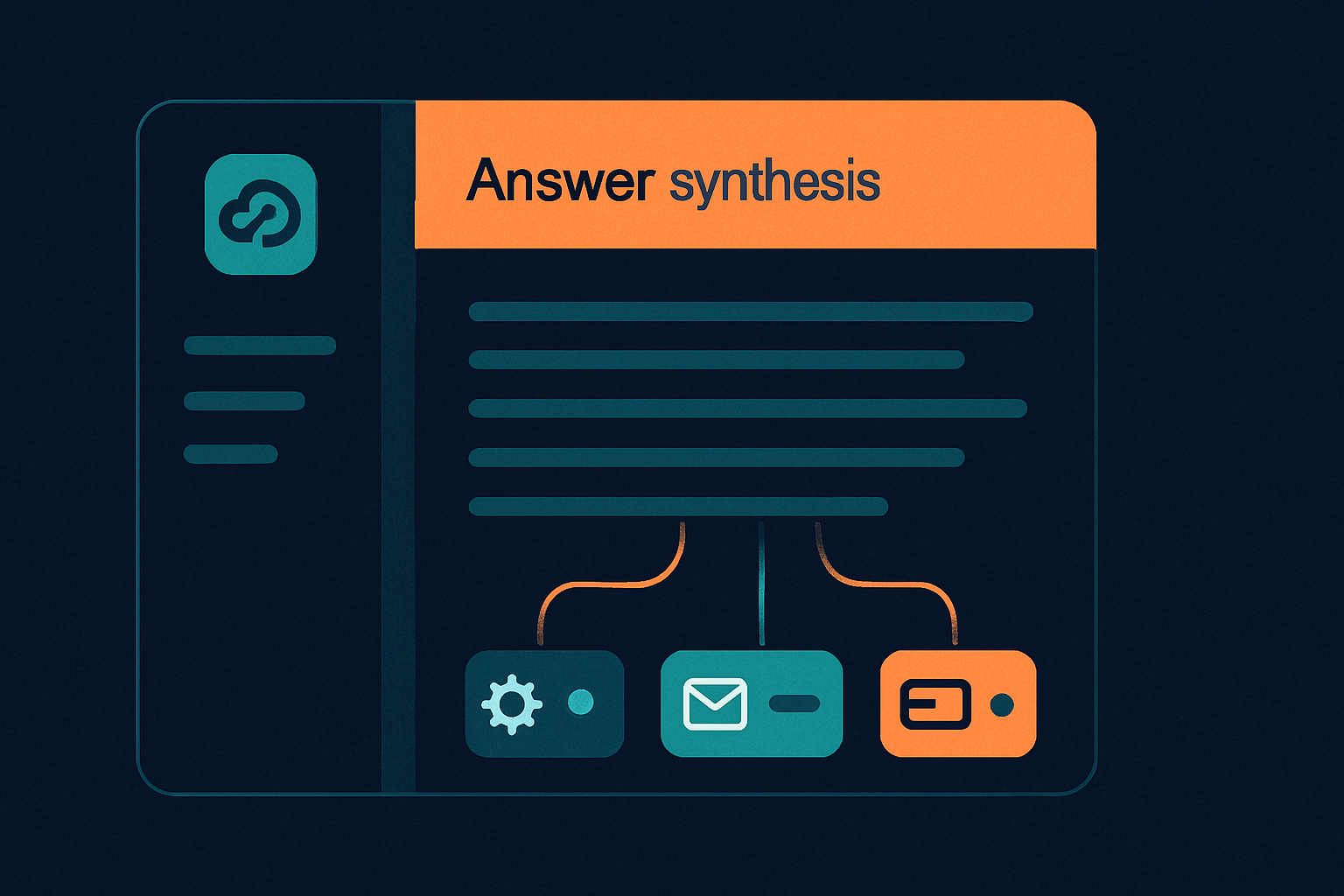
Slack AI cites message permalinks; Gyri attaches claim-level citations to synthesized answers across CRM, email, Slack, and tickets. Internal coordination tolerates channel recaps — customer-facing work, executive briefings, and legal review demand evidence chains beyond Slack threads alone.
Slack AI's citations point to messages and files inside Slack — sufficient when the authoritative record lives in-channel. Customer-facing work needs CRM, email, and ticket evidence — not only channel recaps. Gyri defaults to AI answers with citations with claim-level audit trails.
Insight persistence & memory
Slack retains message history; Gyri stores typed insight objects that compound across sessions and survive employee turnover. Slack is an excellent archive of what was said — searchable, permission-scoped, and durable on Enterprise Grid retention policies. It is not a knowledge graph of account narratives, competitive dossiers, and decision logs agents inherit automatically.
When a competitive finding surfaces in #competitive-intel, Slack preserves the thread. Gyri stores compounding insights on the workspace graph — competitive findings, account narratives, and research conclusions linked to source records. See Institutional Memory When Employees Leave.
MCP agents & delivery
Slack AI delivers through native Slack surfaces; Gyri exposes one MCP endpoint for Claude, Cursor, and custom agents on a federated company graph. Slack AI's closed UX is a feature for adoption — everyone already knows how to @mention the assistant. The tradeoff: agents outside Slack cannot query your company context without copy-paste exports.
Gyri exposes workspace search, graph queries, cited synthesis, and write-back tools via MCP (Model Context Protocol). See MCP for Business Agents. Both can coexist: Slack AI for comms, Gyri for cross-stack GTM agents.
Write-back workflows
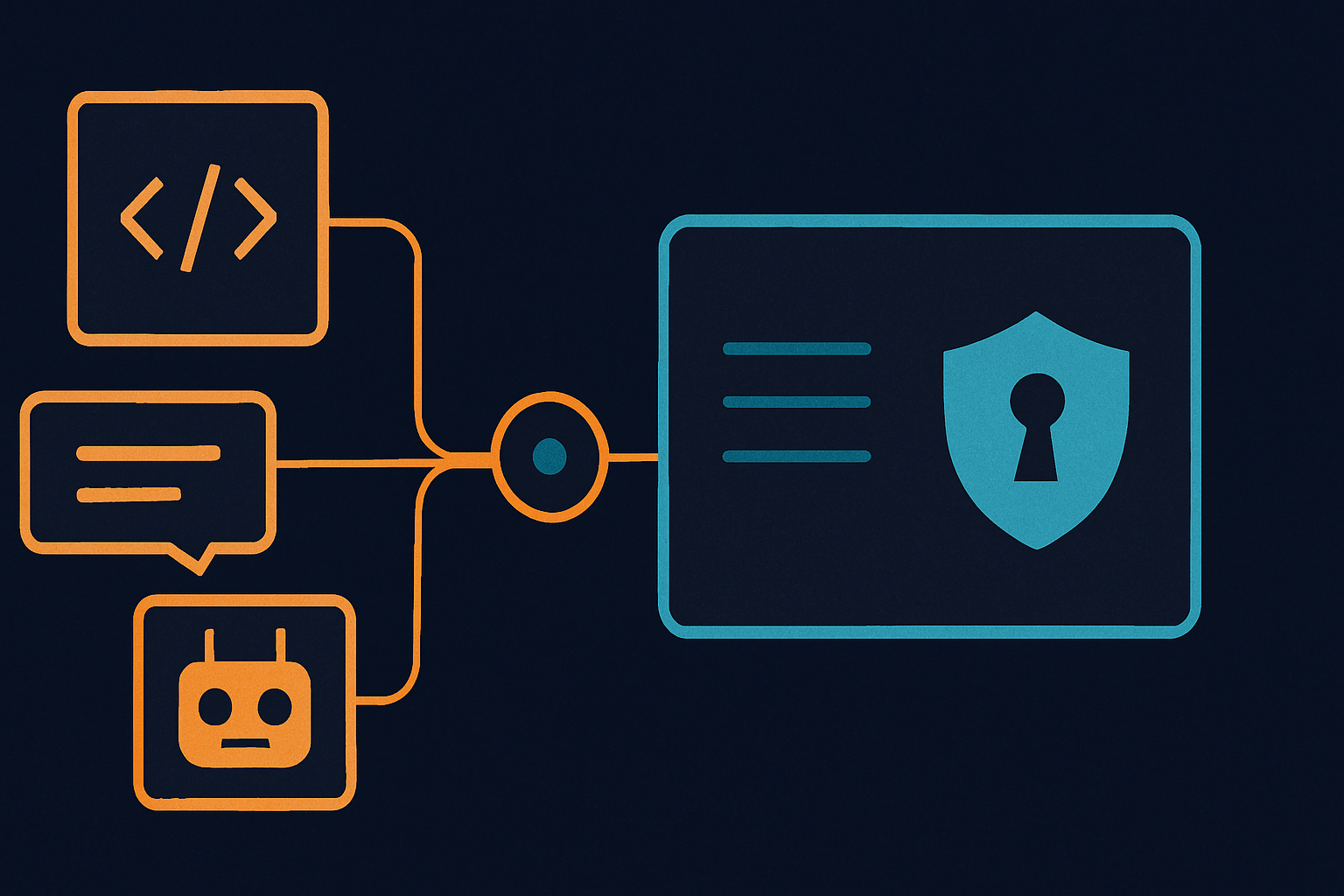
Slack Workflow Builder automates comms; Gyri agents write cited insights, CRM-adjacent records, and briefings across revenue workflows. Slack's write-back surface is strong for what happens inside Slack — post to channels, trigger app steps, Salesforce-in-Slack shortcuts for record updates reps already perform in-client.
Gyri agents write back into GTM systems with admin-defined guardrails: creating typed insights, updating custom records, triggering workspace workflows, and publishing cited briefings — revenue operations beyond thread exports. Read Agents That Write Back.
| Scenario | Slack AI | Gyri |
|---|---|---|
| Post recap to channel | Native summaries and Workflow Builder | Can publish via agents |
| Update CRM from comms context | Salesforce shortcuts; manual | Agents update records with citations |
| Persist competitive finding | Search threads later | Typed insight linked to opportunities |
| Pre-call brief generation | Thread summary | Federated cited brief |
Slack AI wins comms automation; Gyri wins when write-back must compound operational intelligence across quarters.
GTM workflows
Slack AI accelerates comms catch-up; Gyri runs cited GTM workflows that join CRM, email, Slack, and support. Revenue operators evaluate both through concrete scenarios — not feature checklists.
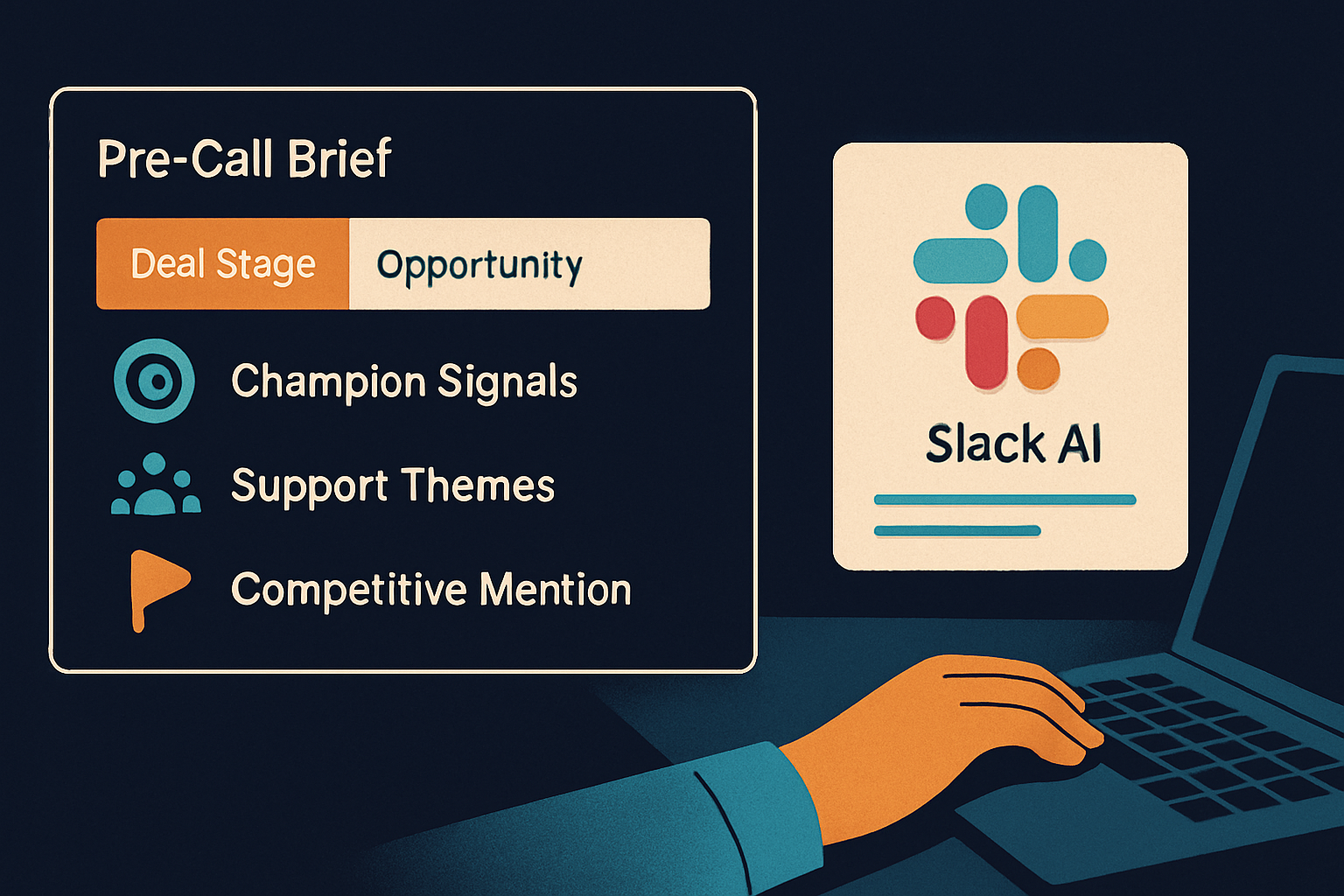
Pre-call briefs: Slack AI recaps #deal-acme threads; Gyri federates CRM, email, tickets, and Slack into one cited brief — AI Pre-Call Briefs From CRM and Email.
Competitive intel: Slack search vs Gyri persistence across CRM, email, and Slack — Competitive Intelligence From Slack and Email.
Churn / CS: Channel recaps vs ticket–CRM correlation — Churn Analysis Across Support Tickets and CRM.
Enablement: Pinned docs vs live cited synthesis — Sales Enablement With Cited AI.
| Team | Slack AI | Gyri |
|---|---|---|
| General employee / comms | Excellent — summaries, search, recaps | Supported; not the primary wedge |
| Sales / AE | Strong for Slack-native deal chatter | Cited pre-call briefs, deal-level federation |
| Customer Success | Channel recap for escalations | Account health synthesis, QBR prep |
| RevOps | Search comms for process discussions | Pipeline analysis, multihop CRM + comms queries |
| Enablement | Find pinned playbooks in Slack | Live battlecards, competitive intel persistence |
| IT / procurement | Easy add-on to existing Slack contract | Secondary buyer; workspace-scoped deployment |
Implementation & TCO
Slack AI rollout is often the fastest AI win in the company; Gyri rollout targets a GTM wedge that proves cited federation value in the first week.
Slack AI enables on Enterprise Grid with familiar admin controls — days to value for comms metrics like reduced catch-up time and search success. Pricing is typically a Slack AI add-on to existing Grid contracts; exact tiers vary by plan and sales negotiation.
Gyri publishes clearer self-serve and team paths at gyri.io/get-started. Rollouts often start with a GTM wedge: connect CRM, email, and Slack; ship pre-call briefs or competitive monitoring; expand once cited answers prove trustworthy in deal reviews. Gyri maintains the federation layer for connector long-tail — you do not build custom Slack-to-CRM pipelines for every cross-system question.
Comms-only teams may treat Slack AI as sufficient. Cross-stack GTM pain usually needs a federation layer beyond Slack. When to use both: Slack AI for comms productivity; Gyri for federated GTM intelligence and MCP agents.
Verdict
Choose Gyri if:
- Your buyers are RevOps, Sales, CS, or Enablement — and success is measured in pipeline, retention, and cited customer-facing output, not only faster Slack scroll.
- You need multihop questions across CRM, email, Slack, and support — not search and summaries bounded to comms.
- Citation-auditable synthesis is required before answers go to customers, executives, or legal.
- You want MCP-native agents in Claude, Cursor, and custom tooling — a federated knowledge layer, not only in-client Slack AI.
- Write-back and insight persistence matter: competitive intel, account narratives, and institutional memory should compound over quarters.
- Slack remains your comms hub, but you need a cross-stack intelligence layer Slack AI was not designed to replace.
Choose Slack AI if:
- Your primary mandate is comms productivity — thread summaries, channel recaps, huddle notes, and workspace search — inside a tool everyone already uses daily.
- IT or internal comms owns the AI initiative, and adoption is measured in Slack DAU and reduced catch-up time, not CRM-linked briefs.
- You want zero new vendors: AI as an add-on to an existing Slack Enterprise Grid contract with familiar admin controls.
- Permission-safe search inside Slack is the core job; your authoritative decisions are posted to channels with good hygiene.
- Salesforce-in-Slack shortcuts and Workflow Builder automations cover your write-back needs without a separate agent platform.
- Cross-system joins matter less than fast recaps of what was said in channels your team already monitors.
Slack AI is genuinely strong at being comms-native AI — arguably the best-in-class experience for summarizing and searching the conversational layer of your company. Gyri is strong at being an agentic knowledge base for GTM teams whose truth spans CRM, email, Slack, and docs. If your immediate pain is revenue operators flying blind across systems while Slack AI only sees the conversation slice, start your free trial with your stack connected and ask for a cited pre-call brief on a live opportunity.
For category context, read What Is an Agentic Knowledge Base? and Connect CRM, Slack, and Docs in One AI Workspace.
FAQ
What is the difference between Gyri and Slack AI?
Slack AI and Gyri both connect company data to AI, but they optimize for different jobs. Slack AI is comms-native AI — channel recaps, thread summaries, huddle notes, and permission-safe workspace search inside Enterprise Grid. Gyri is an agentic knowledge base for GTM teams — federated search across CRM, email, Slack, and docs, multihop graph queries, claim-level cited synthesis, MCP-native agents, and write-back workflows that compound institutional memory.
When should I choose Gyri over Slack AI?
Choose Gyri when your buyers are RevOps, Sales, CS, or Enablement; when you need multihop questions across CRM, email, Slack, and support in one query; when citation-auditable synthesis must link to opportunity IDs and ticket bodies before answers go to customers; and when MCP agents and write-back workflows must persist competitive intel and account narratives across quarters.
When should I choose Slack AI over Gyri?
Choose Slack AI when your primary job is comms productivity — summaries, search, and recaps inside Slack; when IT owns the AI initiative and adoption is measured in reduced catch-up time; when you want an add-on to existing Grid contracts without a new vendor; and when Salesforce-in-Slack shortcuts and Workflow Builder cover your automation scope.
Does Gyri integrate with MCP agents like Claude and Cursor?
Yes. Gyri exposes workspace search, graph queries, cited synthesis, and write-back tools via MCP (Model Context Protocol). Agents in Claude Desktop, Cursor, and custom tooling can query federated context without exporting data to a chat window.
Can I try Gyri before committing?
Yes. Gyri offers a free trial at app.gyri.io where teams connect CRM, email, Slack, and docs and see federated search with cited answers in minutes.