At a glance
If you are evaluating an elastic workplace search alternative for revenue and operations teams, the decision usually comes down to what the platform does after it finds information. Elastic built the infrastructure layer that powers search for thousands of enterprises — Elasticsearch indexes documents at scale, tunes relevance with precision, and gives engineering teams control over mappings, analyzers, and security boundaries. Elastic Workplace Search extends that foundation into a unified search experience across Google Workspace, Microsoft 365, Salesforce, ServiceNow, Jira, and dozens of other connectors.
Gyri is an agentic knowledge base built for GTM operators who need more than ranked links. When the job is operational intelligence across CRM, comms, and docs — with proof, persistence, and write-back — an intelligence layer that treats synthesis and agents as first-class outputs starts to look like a different category than an enterprise search platform.
Gyri delivers four capabilities Elastic Workplace Search was not designed to center:
- Federated GTM stack — one query across CRM, email, Slack, and docs, not siloed app-by-app search
- Cited AI answers — synthesis with source citations your reps can trust in customer-facing work
- Context that compounds — a knowledge graph and persisted insights, not chat that resets every session
- MCP agents that write back — Claude, Cursor, and custom agents that update CRM, create insights, and run workflows
Elastic wins on indexing depth, open-stack deployment flexibility, and search relevance as a craft. Gyri targets RevOps, Sales, CS, and Enablement leaders who need cited operational intelligence that joins CRM stage, email threads, Slack decisions, and support history in one auditable answer.
For adjacent evaluations, see Gyri vs Glean and Gyri vs Coveo.
Quick comparison
Legend: ✅ Strong · ⚠️ Partial · ❌ Not native
| Capability | Gyri | Elastic Workplace Search |
|---|---|---|
| Federation & search | ||
| Federated search (CRM + comms + docs) | near-real-time sync across Gmail, Slack, Drive, CR… | Strong indexing |
| Keyword + semantic hybrid retrieval | exact-match keyword search plus semantic graph ret… | Elastic relevance |
| Real-time / webhook ingestion | webhooks and scheduled crawlers keep records current | Index pipelines |
| Custom API / HTTP connectors | workspace HTTP endpoints and bridge mutations | Open stack |
| Knowledge graph & multihop | ||
| Typed entity knowledge graph | people, deals, emails, threads linked as graph nodes | Index, not graph |
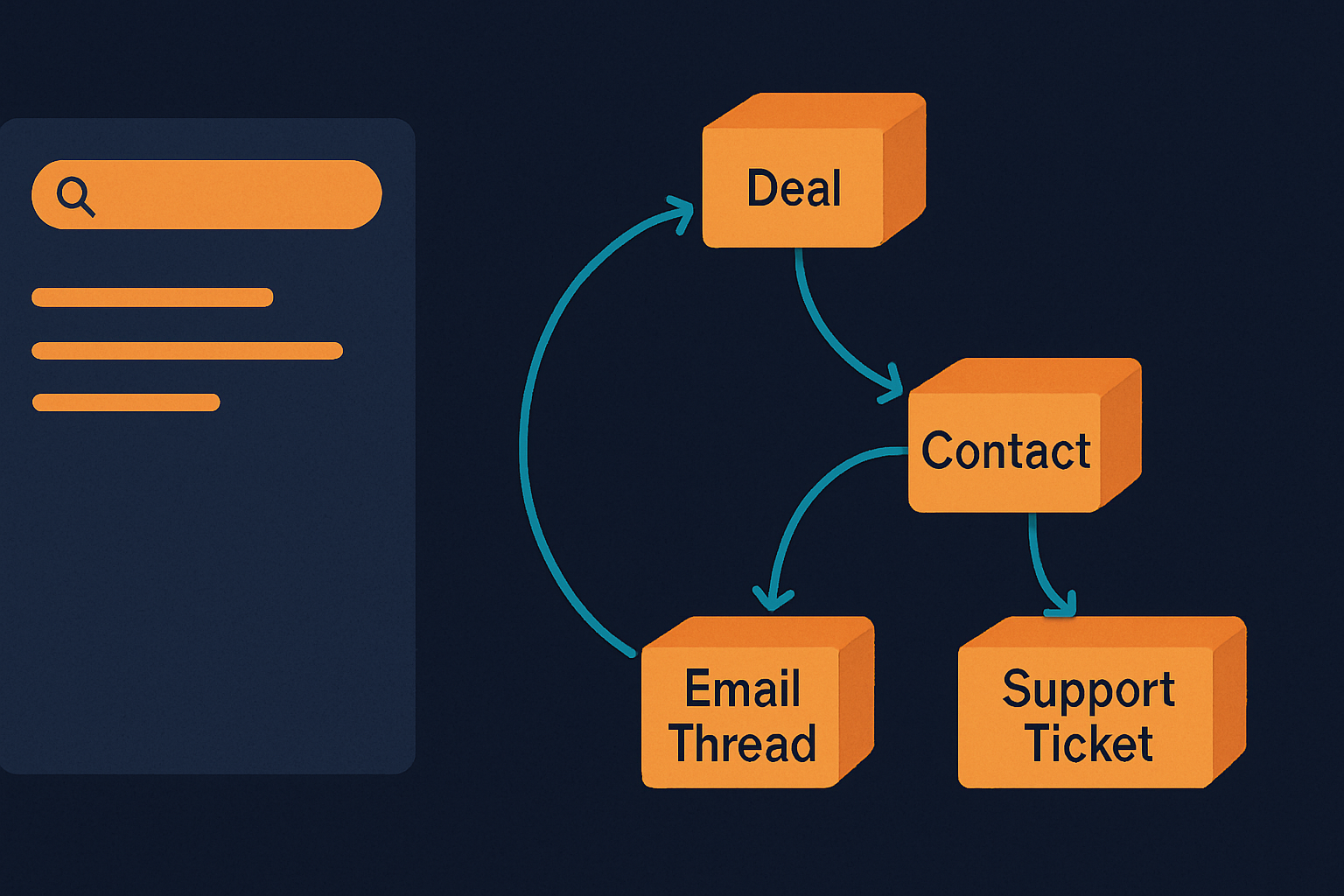
| Multihop GraphQL queries | traverse deal → contact → email → ticket in one qu… | Build your own |
| Cross-source correlation | joins timing, people, and language across systems | Search joins |
| Cited answers & trust | ||
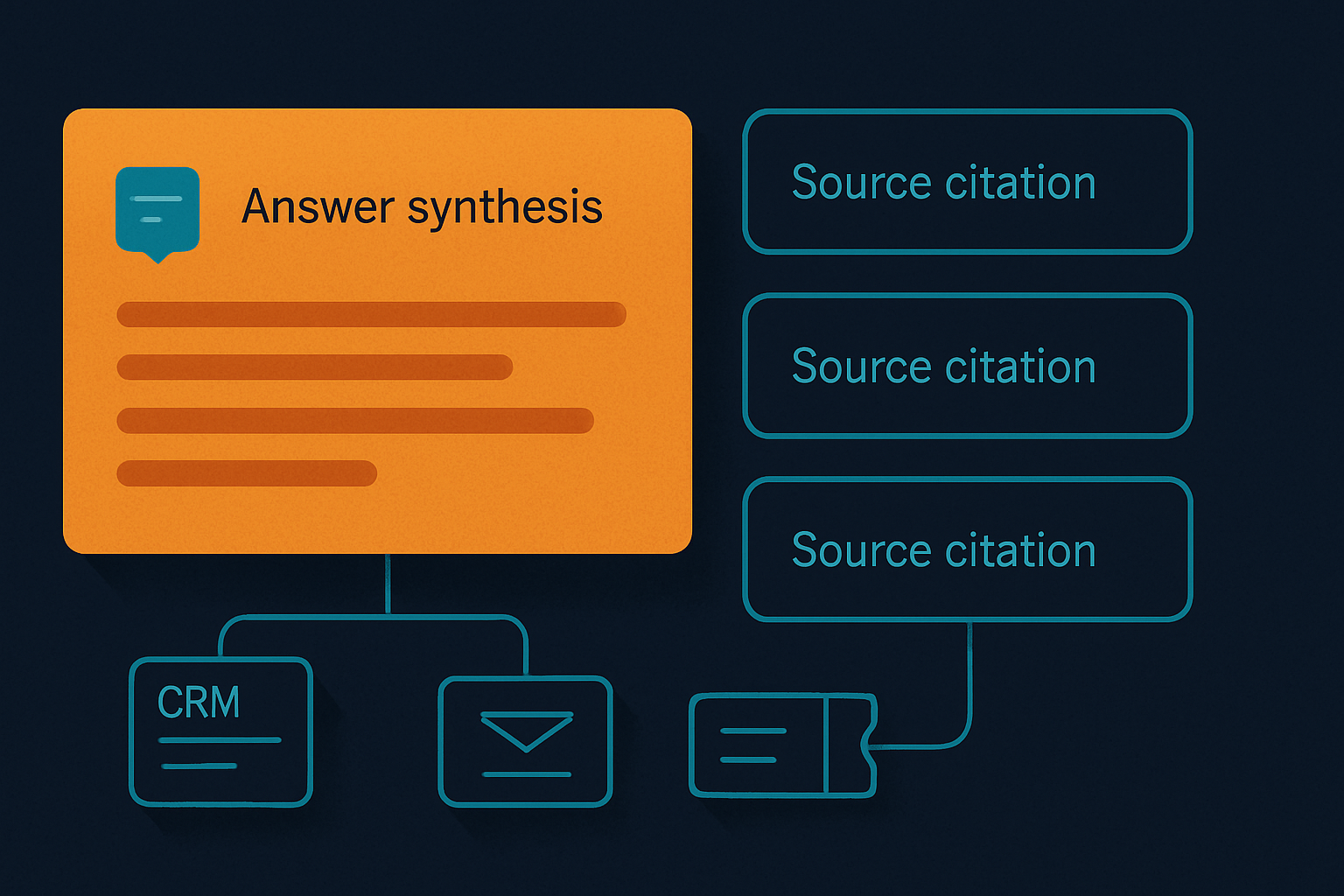
| Cited AI answer synthesis | claim-level citations to source records | Build intelligence layer |
| Audit trail / citation chains | full citation chain back to original sources | Elastic observability |
| Insight persistence & memory | ||
| Compounding insights | structured insights accumulate across sessions | Index only |
| Institutional memory | decisions and context survive employee turnover | No insight store |
| Version history on knowledge | insight and record versioning | Source-dependent |
| MCP agents & delivery | ||
| MCP-native agent endpoint | one MCP surface for Claude, Cursor, custom agents | Build your own |
| Workspace-scoped auth & audit | per-workspace permissions and tool visibility | Elastic security |
| Write-back workflows | ||
| CRM / record write-back | agents update custom records and CRM fields | Search platform |
| Agent-driven workflow automation | stored agents and workspace workflows on rails | Build your own |
| GTM workflows | ||
| Pre-call briefs | cited briefs from CRM + email + support | Links not briefs |
| Competitive intelligence | competitor mentions across Slack and email, persis… | Keyword search |
| Churn / CS health signals | support themes joined to account health in CRM | No synthesis |
| Sales enablement / battlecards | live cited synthesis vs static wiki cards | Search portal |
| Implementation & TCO | ||
| Time to value (GTM teams) | Days–weeks · pre-built connectors and graph schema | If Elastic shop |
| Connector long-tail maintenance | Managed · Gyri maintains federation layer | You tune index |
| Pricing transparency | Published · see gyri.io/get-started | OSS + cloud tiers |
Where Elastic Workplace Search wins
Elastic's strengths are real and worth acknowledging before evaluating alternatives.
- Indexing depth and control — Elasticsearch is the reference implementation for full-text search at scale: custom mappings, field-level security, relevance tuning, and observability platform teams already know
- Connector breadth and enterprise IT fit — SharePoint, OneDrive, Gmail, Google Drive, Salesforce, ServiceNow, Jira, Confluence, and more — with mature cloud, self-managed, and air-gapped deployment models
- Search relevance as a craft — teams with dedicated search engineers iterate on boosting, synonyms, and query pipelines until ranking matches expectations
- Predictable infrastructure economics at scale — once indexed, search queries are cheap relative to repeated LLM synthesis calls — strong for HR policy lookup, engineering runbooks, and IT ticket deflection
- No LLM dependency for core search — Workplace Search can deliver ranked results without generative AI in the critical path — appealing to organizations still navigating AI governance
If your primary requirement is a mature enterprise search platform with deep relevance tuning and broad connector coverage, Elastic earns its reputation. The gap appears when the deliverable is a decision, a cited brief, or a system update backed by cross-tool evidence.

Federation & search
Gyri federates operational GTM systems into one queryable layer; Elastic Workplace Search federates content into a search index. Both connect multiple sources, but the architectural outcome differs: Gyri joins CRM records, email threads, Slack messages, and documents as linked entities; Elastic returns ranked documents and messages with snippets from indexed corpora.
Elastic Workplace Search follows the classic pattern: connectors crawl sources, normalize content into documents, index for keyword and semantic retrieval. Users query; the system returns ranked hits. For pre-call research, a rep preparing for a renewal needs deal stage in CRM, the champion's last emails, open support tickets, and Slack threads where pricing was discussed. Elastic surfaces the best-matching indexed items across sources; Gyri assembles a cited brief from hydrated records across systems in one response. See Federated Search for Business AI.
Elastic wins when the mandate is company-wide findability with open-stack control — self-managed clusters, custom analyzers, and field-level security. Gyri wins when GTM teams need operational joins across CRM, comms, and support without building a custom application on Elasticsearch first.
Revenue teams rarely fail because they cannot find a PDF. They fail because context is scattered: the champion's last email, the Slack thread where pricing was discussed, the support ticket that predicts churn, and the CRM field that nobody updated. Traditional enterprise search returns documents. GTM work requires joined context — people, deals, commitments, and timelines.
Indexing model vs operational graph
Elastic Workplace Search optimizes for document indexing at scale; Gyri models an operational graph where deals, contacts, emails, and tickets link as typed entities. This is the deepest architectural divide between enterprise search and an agentic knowledge base.
Elastic treats indexed content as documents — snapshots. A Salesforce opportunity indexed yesterday reflects fields at crawl time. The relationship between "this email thread" and "this deal stage change" exists only if a human or pipeline encoded it. Questions like "which open opportunities over $50K have champions who went quiet in email after a P1 support escalation?" require manual correlation across search results — or a custom application built on Elasticsearch APIs.
Gyri models connected sources as typed graph nodes — people, deals, emails, Slack threads, support tickets, insights — linked through explicit bridges. Multihop GraphQL traverses deal → contact → email → ticket in one request. See RAG vs Knowledge Graph for Company AI and Multihop GraphQL for Business Intelligence.
Concrete multihop questions revenue teams ask:
- "List every Slack mention of Competitor X tied to opportunities in negotiation stage."
- "Which accounts have declining email engagement AND rising support ticket volume in the last 30 days?"
- "Summarize the decision chain for the Acme renewal — who said what, when, across email and Slack?"
On cited answers and trust, Workplace Search excels at returning the right document or message with a relevant snippet. Customer-facing work often demands more: a cited brief that stitches CRM stage, champion email threads, and support friction into one answer a rep can defend in a QBR. Building that intelligence layer on Elastic means custom RAG pipelines, citation UIs, and governance — the hidden cost center in Gyri vs Building Your Own RAG Stack. Gyri treats AI answers with citations as a default, attaching claim-level citations so operators can audit why the model said "this account is at risk."
On insight persistence, Elastic's index continuously refreshes from source systems — valuable for keeping documents current, but not for compounding operational intelligence. When an AE departs, Elastic retains indexed documents and search history. Gyri retains the graph of what happened on their accounts — decisions, insights, and cited evidence linked to CRM and comms records. See Institutional Memory When Employees Leave.
Synthesis, CRM federation, and GTM scenarios
Gyri exposes company context through MCP for Claude, Cursor, and custom agents with write-back into CRM; Elastic Workplace Search delivers ranked links through Elasticsearch APIs. There is no native MCP endpoint on Workplace Search — teams that want agents querying company context must build integration layers on top of the open stack.
Gyri provides one MCP-native endpoint so agents in Claude Desktop, Cursor, and internal tooling share the same federated graph, permissions, and write-back tools. See MCP for Business Agents and Agents That Write Back.
Elastic Workplace Search is a search platform, not a CRM write-back layer. Workflow automation on search events — triggering actions from queries or result clicks — is typically custom development through Elasticsearch APIs and partner integrations. Gyri agents write back into GTM systems with admin-defined guardrails: creating typed insights, updating custom records, and triggering workspace workflows.
| Scenario | Elastic Workplace Search | Gyri |
|---|---|---|
| Pre-call briefs | Surface ranked emails, Slack, CRM activities | One cited brief with deal stage, champion engagement, tickets — AI Pre-Call Briefs |
| Competitive intel | Keyword search across indexed sources | Federate mentions, correlate to opportunities, persist insights — Competitive Intelligence |
| Churn signals | Search tickets and CRM separately | Join support themes, email tone, and CRM health in one synthesis — Churn Analysis |
| Write-back | Custom Elasticsearch pipelines | Analyze loss → persist competitive insight → update battlecard |
Elastic excels when the deliverable is a ranked list of documents — HR policy lookup, engineering runbooks, IT ticket deflection. Gyri is built when the deliverable is a decision, a brief, or a system update backed by cross-tool evidence.
Ops burden and hybrid deployment
Elastic expects search engineering capacity for cluster ops, mappings, and relevance tuning; Gyri targets GTM operators with a faster wedge to cited federation value.
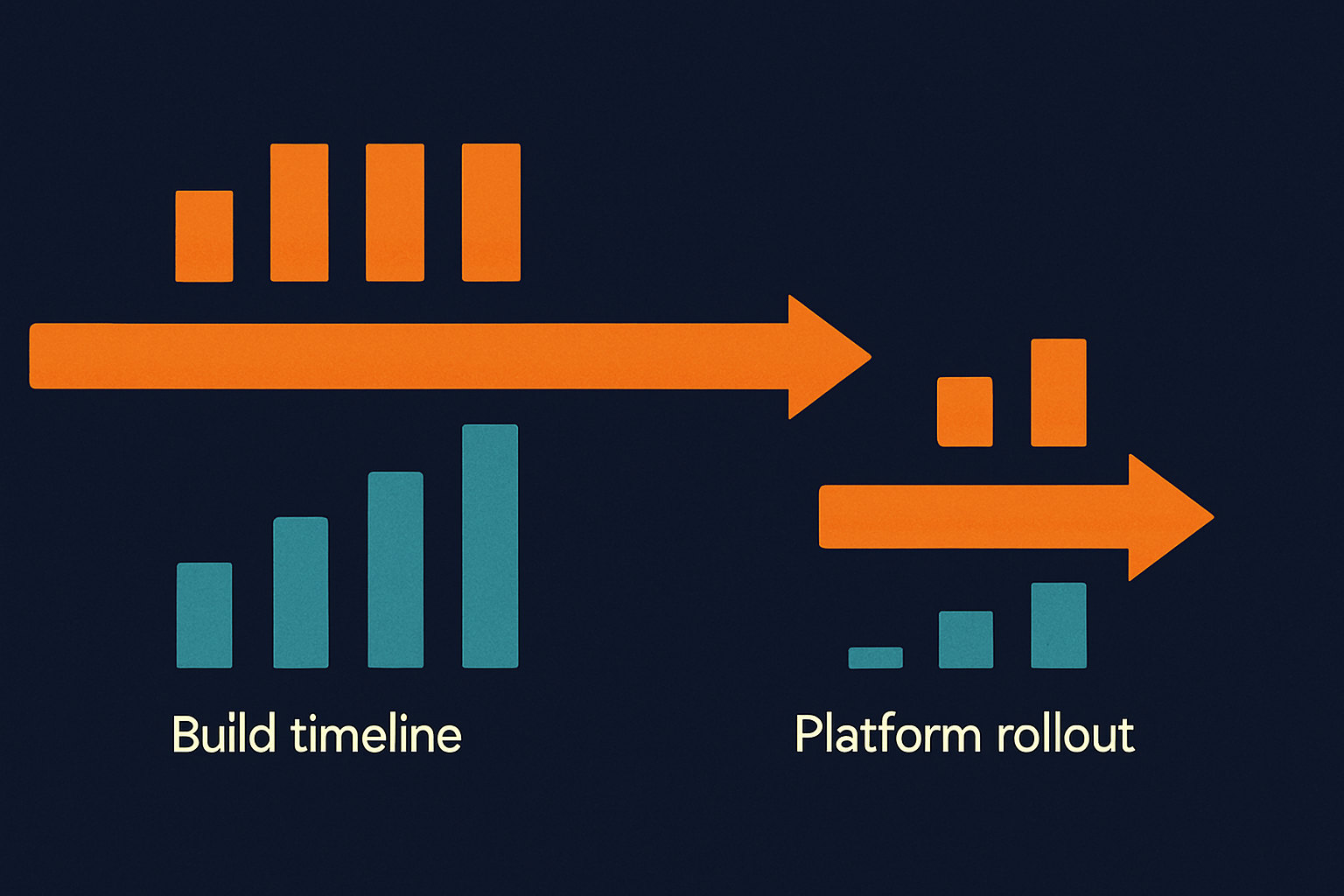
Elastic Workplace Search rollout typically requires connector configuration, index mappings, relevance tuning, cluster sizing, and security hardening — ongoing responsibilities for platform teams. Time to value for GTM teams depends heavily on whether you are already an Elastic shop with staffed search engineers. If not, the path from "indexed content" to "cited pre-call brief" is a build project.
Gyri publishes clearer self-serve and team paths at gyri.io/get-started. Rollouts often start with a GTM wedge: connect CRM, email, and Slack; ship pre-call briefs or competitive monitoring; expand once cited answers prove trustworthy in deal reviews. Connector long-tail maintenance is managed by Gyri's federation layer rather than index tuning per source.
Hybrid patterns are common: Elastic remains the search backbone for engineering docs and company-wide findability; Gyri sits alongside as the operational intelligence layer for revenue teams. Many organizations choose Elastic as infrastructure and build custom RAG in-house — Gyri replaces that build for GTM outcomes while Elastic continues serving IT-wide search elsewhere.
Elastic's OSS plus cloud tier pricing is transparent for infrastructure. Gyri's published tiers make GTM pilot economics predictable without a six-month platform engineering project first.
Verdict
Choose Gyri if:
- Your revenue and operations teams need operational intelligence — cited briefs, churn signals, competitive dossiers — not just enterprise search results
- Federation across CRM, comms, and docs must produce synthesis with inspectable sources, not snippets that require manual assembly
- You want MCP-native agents and write-back workflows without building a custom layer on Elasticsearch
- Insights should compound as typed objects across sessions, not only as indexed documents at crawl time
- You are evaluating an elastic workplace search alternative for GTM outcomes while potentially keeping Elastic for infrastructure search elsewhere
Choose Elastic Workplace Search if:
- Your primary requirement is a mature enterprise search platform with deep relevance tuning and broad connector coverage
- Platform engineering owns search as a capability — cluster ops, mappings, security, and upgrade cadence are staffed
- Users need fast, ranked retrieval at high volume without LLM cost in the critical path
- GTM synthesis, citations, and agent write-back are out of scope — or explicitly planned as a custom build on top of Elastic
- Consolidating onto existing Elastic infrastructure with open-stack deployment flexibility is a strategic goal
Elastic indexes everything. Gyri makes your company's operational graph — CRM, comms, docs, and persisted insights — usable by agents that start informed, cite their sources, and leave knowledge behind for the next question.
If your GTM team is hitting the ceiling of "search then synthesize yourself" on deal prep, competitive intel, or churn analysis, start your free trial to see Gyri federated on your stack — alongside or instead of your existing search infrastructure.
For category context, read What Is an Agentic Knowledge Base? and the Best Agentic Knowledge Base for GTM Teams (2026) buyer's guide.
FAQ
What is the difference between Gyri and Elastic Workplace Search?
Elastic Workplace Search and Gyri both connect company data to AI, but they optimize for different jobs. Gyri is an agentic knowledge base for GTM teams — federated search, multihop graph queries, cited synthesis, MCP-native agents, and write-back workflows. Elastic Workplace Search excels at enterprise search infrastructure; Gyri is built for revenue and operations teams that need cited, persistent operational intelligence.
When should I choose Gyri over Elastic Workplace Search?
Choose Gyri when your buyers are RevOps, Sales, CS, or Enablement; when you need multihop questions across CRM, email, Slack, and support; when citation-auditable synthesis is required; and when MCP agents and write-back workflows must compound institutional memory over quarters.
When should I choose Elastic Workplace Search over Gyri?
Choose Elastic Workplace Search when its native strengths — indexing depth, open-stack deployment, connector breadth, and relevance tuning — match your primary mandate better than cross-stack GTM intelligence. Many enterprises run workplace search alongside an agentic knowledge base for revenue teams.
Does Gyri integrate with MCP agents like Claude and Cursor?
Yes. Gyri exposes workspace search, graph queries, cited synthesis, and write-back tools via MCP (Model Context Protocol). Agents in Claude Desktop, Cursor, and custom tooling can query federated context without exporting data to a chat window.
Can I try Gyri before committing?
Yes. Gyri offers a free trial at app.gyri.io where teams connect CRM, email, Slack, and docs and see federated search with cited answers in minutes.